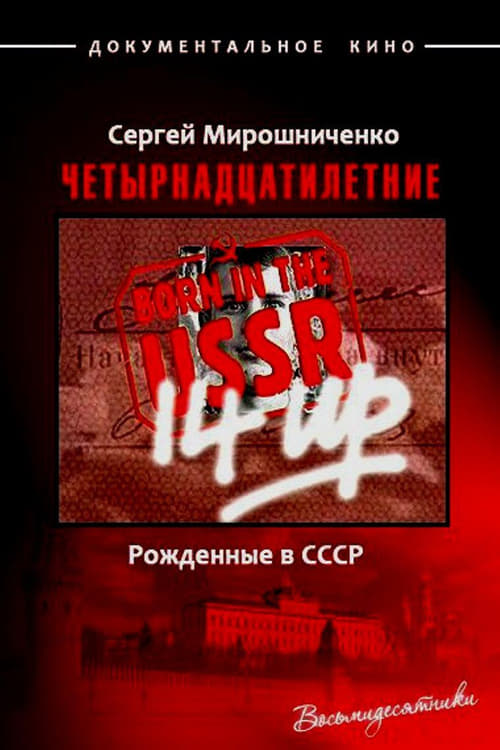
Born in the USSR: 14 Up
1998
No user ratings available yet
Representation score: 5.5 out of 10

Representation Score
Fair
1991
Director
Sergey Miroshnichenko
Runtime
70 minutes
Average Rating
No ratings yetNew Showbiz Analysis
This long-term study offers a detailed look at the fall of a superpower through the eyes of a diverse group of people. By focusing on individual lives, it replaces broad political theories with the everyday experiences of people across various Soviet republics. The film's greatest strength lies in its exploration of multiple ethnicities and nationalities. It goes beyond a single Soviet identity to show how nationality and ethnicity interact with major geopolitical changes. While the documentary does not specifically focus on LGBTQ+ or disability issues, its in-depth look at cultural and ethnic shifts provides a sophisticated analysis of systemic collapse and changing economic ideas.
Category Breakdown
The film does not prominently feature LGBTQ+ stories or non-cisgender identities. Instead, it focuses on broader social and ethnic changes rather than hidden queer themes.
Gender roles are shown through a realistic lens as characters grow older. The film examines how women's ability to drive the story adapts to the economic and social turmoil of the 1990s.
The documentary stands out by featuring individuals from Russia, Kyrgyzstan, Georgia, and Lithuania. It highlights how specific ethnic nuances and the lingering effects of colonialism emerge during the Soviet collapse.
The film critiques the shift from socialism to capitalism. It portrays the rise of religious and capitalist institutions as complex and often disruptive elements in the subjects' lives.
Disability does not play a central role in the film's themes or narrative. The film focuses on general physical and mental growth instead.
Present on Screen
Limited or Absent
Official Synopsis
Seven Up series the first ever reality soap. The concept involves filming and getting to know a number of children, aged seven, across the nation. These children are then re-visited every 7 years to see how their lives are progressing. A varied group of children from different regions and social classes were selected. The Soviet group includes children from across the union, including Russia, Kirgizstan, Georgia and Lithuania. The filming took place during a time of civil and ethnic unrest and poverty.
1998
2010
2012
2017
1998
2015
2006
2015
No reviews yet. Be the first to share your thoughts on this movie!
Use the rating form above to leave a star rating and optional review.