Adventures Italian Style
2020
No user ratings available yet
Representation score: 3.5 out of 10
Representation Score
Fair
2007
Director
Franziska Meyer Price
Runtime
92 minutes
Average Rating
No ratings yetNew Showbiz Analysis
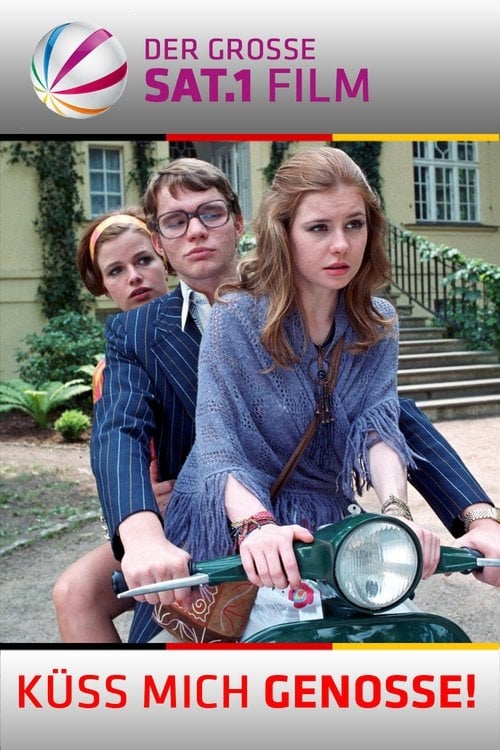
Küss mich, Genosse! functions as a socio-political commentary wrapped in a comedic time-travel premise. Its main strength lies in its cultural critique rather than broad demographic representation. By placing a modern woman in 1974, the film disrupts historical binaries and examines the systemic constraints of both East and West Germany. Though the film lacks substantial LGBTQ+ or racial representation, it effectively challenges the idealized stability of the past. The protagonist's ability to drive the story serves as a tool to question the rigid institutional structures of the era.
Category Breakdown
The film focuses on the heterosexual romance between the protagonist's parents, set against the backdrop of 1974's societal pressures. There is no explicit exploration of LGBTQ+ stories or experiences.
The female protagonist, Jenny, has a unique perspective and ability to act due to her time-traveling experience. She observes and navigates the era's patriarchal structures from an outsider's viewpoint.
The film highlights the geopolitical tensions in a divided Germany in 1974. It emphasizes national and ideological identity rather than exploring the intersection of race and ethnicity.
The film contrasts Western capitalism with Eastern socialism, avoiding a single moralizing viewpoint. Instead, it highlights the tension between individual ability to act and systemic authority in both systems.
There is no indication that disability or neurodivergence plays a role in the characters' arcs or the plot progression.
Present on Screen
Limited or Absent
Official Synopsis
Jenny is hit in the head by a soccer ball. When she comes to, the clock has turned back exactly 32 years! It is June 21, 1974, the year of the football World Cup, one day before the football match between the Federal Republic of Germany and the GDR. Jenny experiences two turbulent days at the side of her future parents - in both parts of Germany.
2020
2003

2017
2006
2006

1986

1991
1978
No reviews yet. Be the first to share your thoughts on this movie!
Use the rating form above to leave a star rating and optional review.