
I'm an Old Communist Hag
2013
No user ratings available yet
Representation score: 5.0 out of 10
Representation Score
Fair
2006
UnratedDirector
Corneliu Porumboiu
Runtime
89 minutes
Average Rating
No ratings yetNew Showbiz Analysis
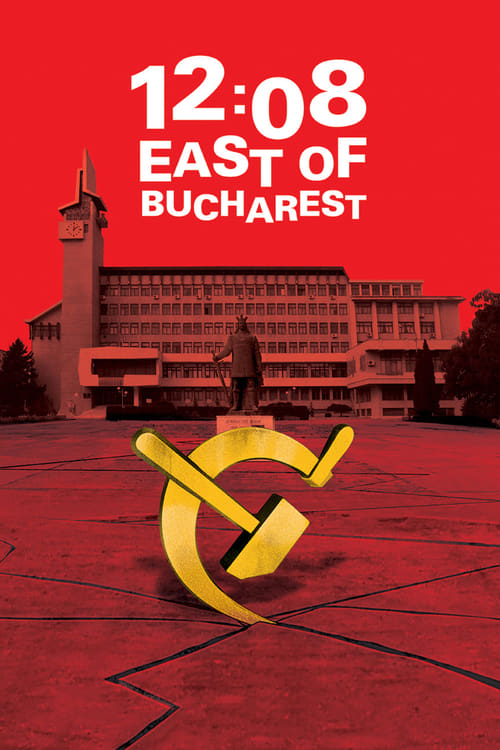
12:08 East of Bucharest is a film that prioritizes philosophical inquiry over broad demographic representation. It serves as a detailed look into post-communist Romania, emphasizing the fragmented nature of historical truth. While the film lacks diversity in terms of gender, race, and sexual orientation, it compensates with a sophisticated postmodern approach to history. By presenting absurd, subjective perspectives, it challenges conventional revolutionary narratives. Its strength lies in its critique of institutional authority rather than its demographic variety.
Category Breakdown
The film does not include any LGBTQ+ characters or themes related to queer experiences. The story focuses on a male-dominated investigation of historical events.
Male characters hold the primary roles and intellectual discussions. The film centers on political tensions rather than gender dynamics.
The cast is mainly made up of people from the same ethnic background, reflecting the specific context of post-communist Romania. It emphasizes local historical accuracy over diverse representation.
The film effectively breaks down nationalistic myths and questions the sanctity of the 1989 Revolution. It uses moral relativism to criticize how state institutions shape historical truth.
The film does not focus on visible or invisible disabilities. Character struggles are portrayed through socioeconomic and psychological issues rather than disability representation.
Present on Screen
Limited or Absent
Official Synopsis
It's the 22nd of December. Sixteen years have passed since the revolution, and in a small town Christmas is about to come. Piscoci, an old retired man is preparing for another Christmas alone. Manescu, the history teacher, tries to keep up with his debts. Jderescu, the owner of a local television post, seems not to be so interested in the upcoming holidays. For him, the time to face history has come. Along with Manescu and Piscoci, he is trying to answer for himself a question which for 16 years has not had an answer: "Was it or wasn't it a revolution in their town?"
2013

1989
2002
2003
2012
1992

1997
2014
No reviews yet. Be the first to share your thoughts on this movie!
Use the rating form above to leave a star rating and optional review.