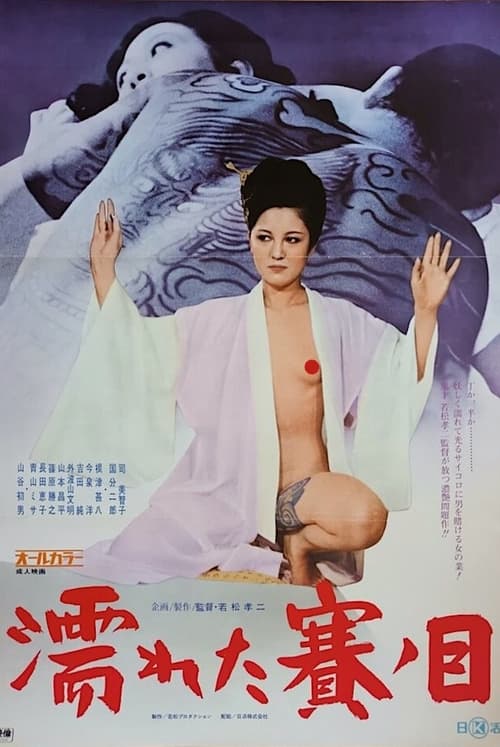
Wet Dice
1974
No user ratings available yet
Representation score: 8.1 out of 10

Representation Score
Fair
1964
Director
Kō Nakahira
Runtime
95 minutes
Average Rating
No ratings yetNew Showbiz Analysis
Kō Nakahira’s film is a sophisticated deconstruction of mid-century social norms. It replaces rigid moral frameworks with a focus on personal autonomy and sexual ability to act. The film excels in subverting traditional gender hierarchies by giving female characters significant roles. However, it remains within strict heterosexual and culturally homogeneous boundaries. Ultimately, the film critiques traditional virtues, favoring situational ethics and individual freedom over established social or familial expectations.
Category Breakdown
The film centers on heterosexual relationships and does not include any characters with non-binary genders or same-sex relationships.
Female characters play a significant role in driving the story and are not portrayed as passive objects. The plot emphasizes the autonomy of sexually confident women rather than traditional submissive roles.
The production features a cast that reflects a culturally homogeneous Japanese population, which aligns with the film's 1964 domestic setting.
The narrative challenges traditional social and religious norms, focusing on individual freedom and subjective morality over institutional ethics and conventional virtues.
There are no characters with visible or invisible disabilities that are central to the plot or character development.
Present on Screen
Limited or Absent
Official Synopsis
One evening, at the Marine Tower observatory, cosmetics salesman Ichiro Iki is drawn into conversation with an unfamiliar young lady Akiko. She invites Ichiro back to a hotel where they make love but part without even exchanging names. A week later, they have a second chance encounter at the observatory. This time, Ichiro is the one who pursues her. Back at the hotel, Akiko begs Ichiro to give her sister – Kyoko, a bar hostess – absolute hell. Akiko resents her sister for lecturing on chastity, while wantonly indulging in promiscuous activity. Ichiro takes an interest in Kyoko and sets out towards her bar…
1974
1969

1964

1956
1969
1977
1966
1975
No reviews yet. Be the first to share your thoughts on this movie!
Use the rating form above to leave a star rating and optional review.