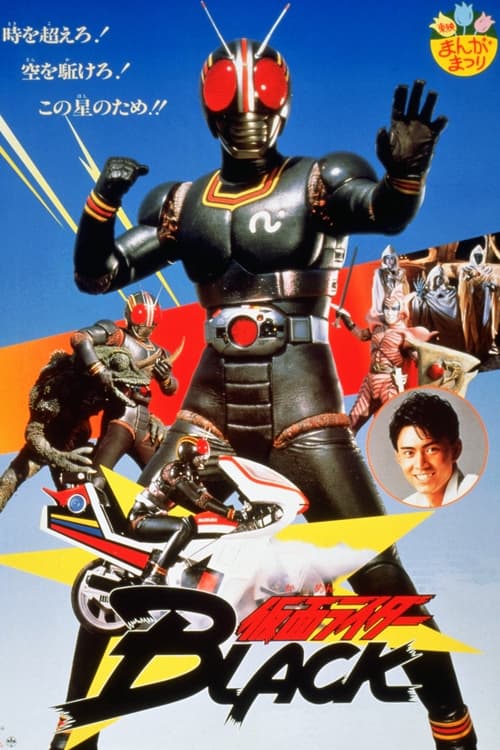
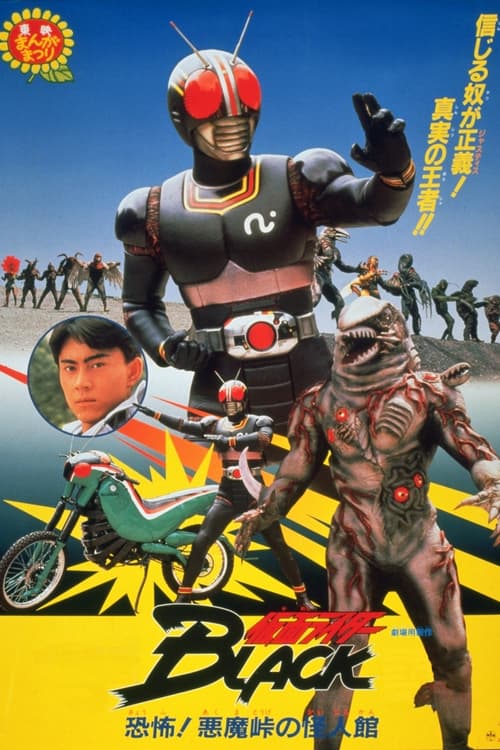
Kamen Rider Black: Hurry to Demon Island!
1988
No user ratings available yet
Representation score: 1.4 out of 10
Representation Score
Minimal
1988
Director
Takeshi Ogasawara
Runtime
25 minutes
Average Rating
No ratings yetNew Showbiz Analysis
This film exemplifies 1980s Tokusatsu genre clichés. It relies on a binary morality structure where a male hero must rescue a passive female family unit from an evil organization. The narrative lacks depth, focusing on a culturally singular Japanese setting and traditional gender roles. It functions as a straightforward action adventure without disrupting social hierarchies. Ultimately, the film adheres to the era's standard conventions, prioritizing heroism and domestic protection over diverse or nuanced character representation.
Category Breakdown
The film focuses on a traditional rescue mission involving a scientist and his family. There are no characters with non-binary or LGBTQ+ identities, and the story does not challenge assumptions about straight relationships.
The story centers around the male protagonist as the main driver of change. Female characters are portrayed as passive victims of abduction, reinforcing traditional hierarchies where women motivate male action.
Set in Hokkaido, the cast depicts a homogeneous Japanese population. The film lacks intentional racial blending, staying within a culturally specific and ethnically singular framework.
The narrative operates within a traditional good-versus-evil framework. It emphasizes the importance of the domestic sphere and individual heroism, avoiding complex social critiques.
There are no characters with visible or invisible disabilities portrayed with ability to act. The focus remains on superhuman transformation rather than disability representation.
Present on Screen
Limited or Absent
Official Synopsis
The city of Yūbari in the Hokkaido prefecture has become a ghost town following the presence of Shadow Moon and his minions of Gorgom. Makino, a scientist working on Gorgom's top-secret robot experiment, escapes from the evil organization and returns to Tokyo, only to find out that his wife and daughter have been abducted. As Kamen Rider Black, Kotaro travels to Yubari to save Makino's family and liberate the town from Shadow Moon's evil grasp.
1988
1990

1972
1972
1984
2004
1974

2008
No reviews yet. Be the first to share your thoughts on this movie!
Use the rating form above to leave a star rating and optional review.