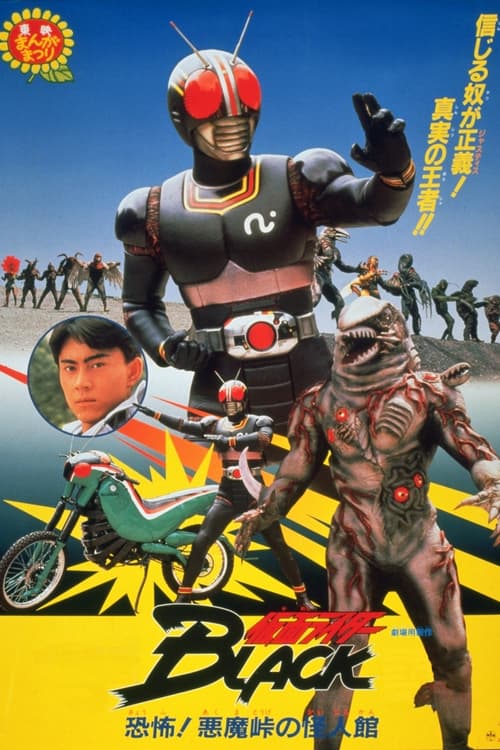
Kamen Rider Black: Terror! Demon Mansion at Devil's Pass
1988
No user ratings available yet
Representation score: 0.8 out of 10
Representation Score
Minimal
1988
Director
Michio Konishi
Runtime
24 minutes
Average Rating
No ratings yetNew Showbiz Analysis
Kamen Rider Black: Hurry to Demon Island! is a typical 1980s Tokusatsu production that emphasizes heroic archetypes over social complexity. The film relies on a clear-cut moral landscape where a single masculine hero faces off against a clear villainous force. The narrative structure reinforces traditional social hierarchies and gender roles. While it does not actively promote harmful stereotypes, it lacks the intention to challenge the era's standard demographic or cultural norms. Ultimately, the film serves as a period-accurate example of its genre, emphasizing physical prowess and traditional stability rather than characters who reflect more than one aspect of diversity or systemic critique.
Category Breakdown
The film does not include any LGBTQ+ characters or explore non-cisgender identities. It follows the assumption that everyone is straight or cisgender, which was common in late-80s Japanese action media.
The narrative focuses almost entirely on the male protagonist, Kotaro Minami. Female characters are portrayed as needing protection, reinforcing traditional gender roles and clichés.
The cast and setting are ethnically uniform, reflecting a localized, Japanese production. There is no diverse casting or intentional race-bending to break standard demographic representations.
The story centers on a righteous battle against the evil Gorgom organization. It uses a traditional good versus evil framework that emphasizes social order and protecting the innocent.
The film does not feature any characters with visible or invisible disabilities. The focus remains on superhuman abilities and physical strength.
Present on Screen
Limited or Absent
Official Synopsis
Originally known simply as Kamen Rider Black during its theatrical release. Children all over Tokyo mysteriously disappear without warning. Kotaro suspects that the Gorgom are behind the abductions and follows a suspicious-looking tour bus with children on it, only to lose its trail off a cliff. With the help of a fisherman, Kotaro travels to a remote island and uses his abilities as Kamen Rider Black to save the children and foil Gorgom's latest evil scheme.
1988
1961
1984
1990
1972

1972
2004
1974
No reviews yet. Be the first to share your thoughts on this movie!
Use the rating form above to leave a star rating and optional review.