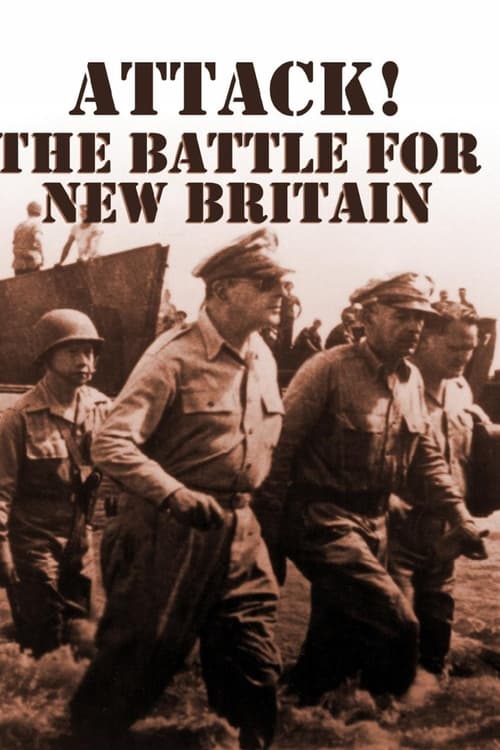
Attack! The Battle for New Britain
1944
No user ratings available yet
Diversity score: 1.3 out of 10
No Poster Available
1944
Director
Robert Stevenson
Runtime
42 minutes
Average Rating
No ratings yetSynopsis
Know Your Ally: Britain was a 45-minute propaganda film made in 1944. It was narrated by Walter Huston and produced by the United States War Department and Signal Corp to solidify Anglo-American solidarity within the ranks as well as counter Nazi propaganda aimed at weakening the Alliance.
Overall Score
Minimal
Category Breakdown
LGBTQ+ Representation
The film adheres to the rigid heteronormative standards of the 1940s. There are no depictions of non-cisnormative identities or same-sex intimacy.
Gender Representation
Agency is primarily centered on male-dominated military structures. While women's domestic contributions may be acknowledged, the film reinforces traditional mid-20th-century gender hierarchies.
Racial & Ethnic Diversity
The narrative focuses heavily on a homogenized Western identity to foster Anglo-American solidarity. It prioritizes the shared heritage of the United States and Great Britain.
Religious & Cultural Diversity
The film promotes a singular morality centered on Western democratic values and patriotism. It functions to strengthen traditional family structures and state authority.
Disability Representation
There is no representation of neurodivergence or physical disabilities through a lens of agency. Disability is not addressed as a meaningful identity.
Strengths
Areas for Improvement
AI Analysis
Produced as a wartime propaganda tool, *Know Your Ally: Britain* prioritizes nationalistic cohesion over social diversity. Its primary objective is to solidify Anglo-American solidarity and counter Axis disinformation through a unified, homogeneous identity. The film's architecture is built to reinforce existing social hierarchies and traditional Western institutions. By focusing on the shared heritage of the Allied powers, it emphasizes a singular, patriotic narrative designed for military mobilization. Consequently, the work lacks representation for marginalized groups, reflecting the era's rigid social norms and the strategic need for a consolidated, traditionalist front during the conflict.
1944
1945
1945

1943

1946

1942
1944
1945
1943
No reviews yet. Be the first to share your thoughts on this movie!
Use the rating form above to leave a star rating and optional review.