The Phantom
1931
No user ratings available yet
Representation score: 2.7 out of 10
Representation Score
Minimal
1936
NRDirector
Roland D. Reed
Runtime
70 minutes
Average Rating
No ratings yetNew Showbiz Analysis
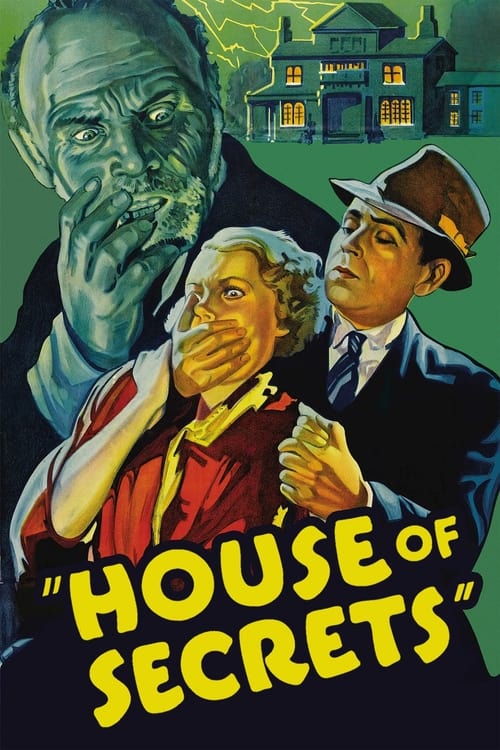
The House of Secrets is a standard 1930s mystery thriller that adheres strictly to the social and cultural norms of its era. The narrative structure prioritizes traditional hierarchies, with a male lead driving the plot through an investigation of ancestral lineage and property. Representation is minimal, as the film relies on established genre clichés like the 'crazed scientist' to generate tension. These elements often utilize stigmatized traits for shock value rather than providing meaningful character depth. Ultimately, the film functions as a conventional piece of B-movie filmmaking, reinforcing the homogeneous social compositions and conservative storytelling traditions typical of the early sound era.
Category Breakdown
The film features a conventional romantic relationship between Barry Wilding and Julie Kenmore, without any representation of non-straight or non-cisgender identities. The story does not challenge the assumption that everyone is straight or cisgender.
The plot revolves around the male protagonist's investigation of his inheritance, with Muriel Evans playing a significant role as a catalyst for his journey. However, her role is primarily supportive of the male lead's narrative arc.
The cast and setting suggest a predominantly white, Anglo-Saxon composition. There is no indication of racial diversity or inclusion of non-white characters with significant roles.
The story centers on Western themes of ancestral property and inheritance, utilizing classic Gothic clichés. It does not critique Western institutions or social structures.
Mental instability and physical suffering are used as horror devices. The film relies on the 'mad scientist' archetype, which does not provide nuanced or meaningful representation of disability.
Present on Screen
Limited or Absent
Official Synopsis
Two men stumble into an old mansion, and get involved with a crazed scientist, torture chambers and sinister medical experiments.
1931
1935
1953
1940
1944
1940

1916
1934
No reviews yet. Be the first to share your thoughts on this movie!
Use the rating form above to leave a star rating and optional review.