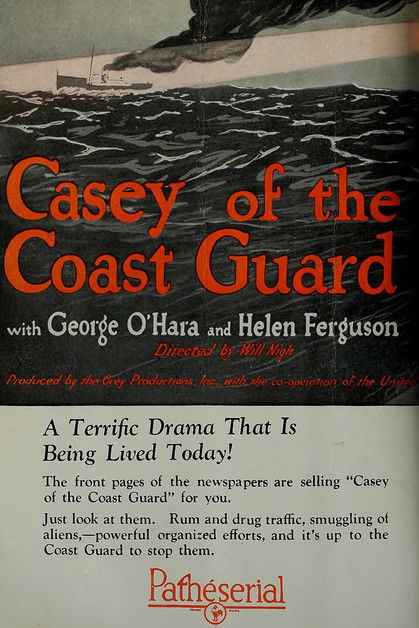
Casey of the Coast Guard
1926
No user ratings available yet
Representation score: 0.5 out of 10
No Poster Available
Representation Score
Minimal
1939
ApprovedDirector
Charles Lamont
Runtime
63 minutes
Average Rating
No ratings yetNew Showbiz Analysis
Pride of the Navy is a conventional 1930s action-adventure that prioritizes traditional social hierarchies. The plot follows a disruptive cadet who finds redemption through naval engineering, a journey that reinforces established institutional norms. The film lacks engagement with the overlapping aspects of identity, focusing instead on a singular, masculine professional arc. It functions as a period piece that celebrates individual achievement within the context of national service. Ultimately, the production adheres to the standard Hollywood studio system of its era, offering little in the way of challenging or diverse storytelling.
Category Breakdown
The film focuses on a male-centric military and engineering storyline. There is no indication of queer subtext or non-straight identities.
The story centers on a male protagonist's journey through a military academy. Themes of naval authority and technical innovation are framed through a traditional masculine perspective.
The setting suggests a homogeneous institutional environment. The film likely reflects the era's tendency toward Anglo-centric casting within Western military institutions.
The narrative emphasizes institutional loyalty and patriotism. It reinforces the value of innovation within a structured state framework without critiquing these systems.
There is no mention of characters navigating physical, sensory, or neurodivergent conditions.
Present on Screen
Limited or Absent
Official Synopsis
A disruptive Annapolis naval cadet refuses to tow the line and so gets booted out of the prestigious academy. Later, he takes to designing speedboats. They are innovative and soon the Navy comes a-knocking in hopes that he will design a fast and easily maneuverable boat to carry torpedoes.
1926

1966

1951
1960
1950
1942

1937
1934
No reviews yet. Be the first to share your thoughts on this movie!
Use the rating form above to leave a star rating and optional review.