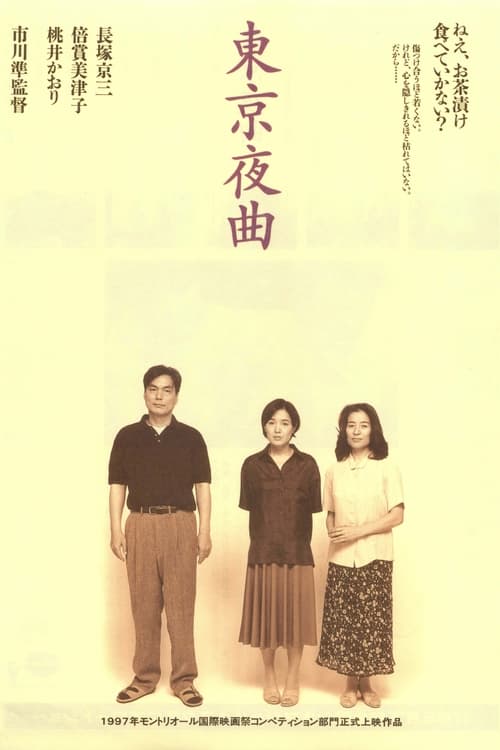
Tokyo Lullaby
1997
No user ratings available yet
Representation score: 5.0 out of 10
Representation Score
Limited
1995
Director
Jun Ichikawa
Runtime
92 minutes
Average Rating
No ratings yetNew Showbiz Analysis
The film is a realist drama that prioritizes domestic stability and conventional social roles. It offers a quiet, nuanced look at urban life through the lens of traditional interpersonal dynamics. While the narrative explores the emotional labor of its characters, it does not actively disrupt established identity-based hierarchies. The focus remains on the endurance of the family unit and the rhythms of daily work. Ultimately, the film serves as a localized study of a specific social stratum, favoring realism over the inclusion of diverse or subversive identity narratives.
Category Breakdown
The story focuses on heterosexual relationships and traditional dating dynamics. There are no queer narratives or non-cisgender identities in the plot.
Kenichi acts as the primary provider, while Yoko demonstrates a significant role in driving the story through her transition into the workforce. The plot remains centered on traditional gendered emotional archetypes.
Set in a specific Tokyo district, the film depicts a culturally homogeneous Japanese environment. It functions as a localized study rather than a multicultural narrative.
The film emphasizes familial bonds and the stability of routine life. It portrays traditional social structures and cycles of labor without challenging social norms.
No visible or invisible disabilities are portrayed as central to the character arcs or the progression of the plot.
Present on Screen
Limited or Absent
Official Synopsis
Living in an old Tokyo district, Kenichi works at a second-hand bookshop to support his sister, Yoko, a high school student. When Yoko graduates, she starts work at a photo shop. By the time, Kenichi's girlfriend has decided to marry someone else as she is tired of waiting for him. When Yoko starts dating Kenichi's best friend, Makoto , he is strangely resentful, but when Makoto is involved in a fatal accident, brother and sister resume their routine life.
1997
1969
2006

1998

1985
1997
1956
1999
No reviews yet. Be the first to share your thoughts on this movie!
Use the rating form above to leave a star rating and optional review.