The Path of Hope
1950
No user ratings available yet
Representation score: 4.3 out of 10
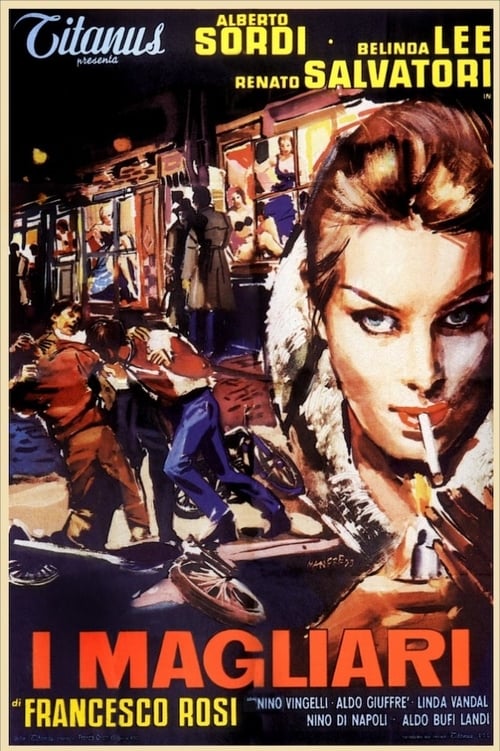
Representation Score
Limited
1959
Director
Francesco Rosi
Runtime
111 minutes
Average Rating
No ratings yetNew Showbiz Analysis
The Swindlers focuses on the pressures of systemic issues rather than identity politics. It offers a sophisticated critique of institutional corruption, presenting criminal survival as a response to capitalist failures. This results in a deep, inclusive examination of social hierarchies. However, the film’s demographic scope is limited. It adheres to the social norms of the late 1950s, lacking LGBTQ+ representation and dominated by a male perspective. The racial makeup is confined to the context of Italian labor migration. Overall, the film prioritizes thematic depth over a broad demographic representation.
Category Breakdown
The film centers on the economic struggles and migratory experiences of male protagonists. There are no representations of non-straight or non-cisgender identities, nor are there any narratives that question the assumption that everyone is straight or cisgender.
The story revolves around male characters dealing with economic hardships. Women play a supporting role, but they do not have enough influence to drive the main plot.
The film examines the movement of Italian workers across Europe. However, the cast is predominantly made up of people from similar backgrounds, focusing on class and nationality rather than a wide range of ethnicities.
The film critiques established institutions and capitalist systems. It portrays the 'magliari' as individuals navigating a world where systemic inequality makes it hard to distinguish between commerce and deception.
There is no significant depiction of visible or invisible disabilities in the film.
Present on Screen
Limited or Absent
Official Synopsis
Mario is in Hannover to work as a miner but after losing his job he decides to go back to Italy. When Totonno steals his passport to avoid the police and later on he offers him a new job as "magliaro" (cloth seller), Mario changes his mind and decides to follow Totonno to Hamburg. In Hamburg, Totonno and his friends have to sell Mayer's cloth, but they meet with the hostility of a Polish gang and Mario falls in love with Paula Mayer.
1950

1949
1959

1957
1948
1949
1975
1980
No reviews yet. Be the first to share your thoughts on this movie!
Use the rating form above to leave a star rating and optional review.