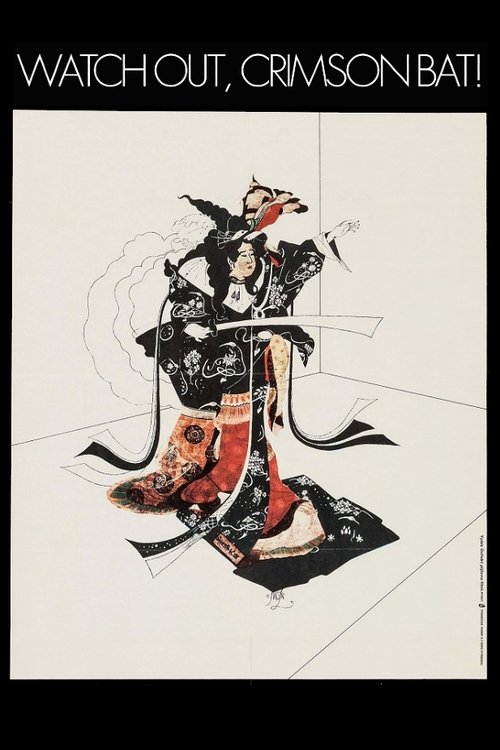
Watch Out, Crimson Bat!
1969
No user ratings available yet
Diversity score: 5.7 out of 10
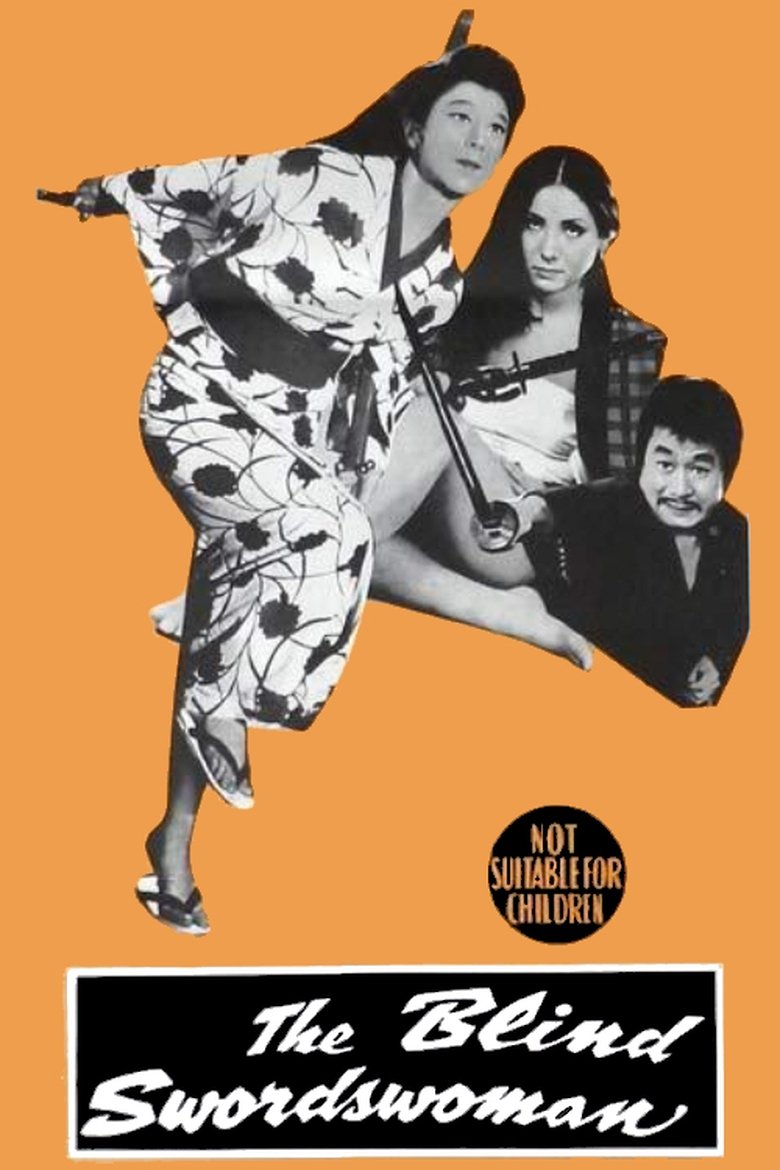
1969
Director
Sadatsugu Matsuda
Runtime
88 minutes
Average Rating
No ratings yetSynopsis
A young girl named Oichi is abandoned by her mother and blinded by a lightning strike. When her guardian is killed, she learns to wield a sword from a traveling ronin. As she develops into a master swordsman, her profession becomes that of a bounty hunter. Many test her sword and many die by her skills. She travels throughout the countryside to seek her mother and her revenge.
Overall Score
Fair
Category Breakdown
LGBTQ+ Representation
The narrative focuses strictly on Oichi's personal quest for vengeance and her search for her mother. There is no visible presence of queer identities or non-heteronormative subtext.
Gender Representation
Oichi subverts traditional gender roles by occupying the masculine space of a master swordsman. She is an autonomous bounty hunter rather than a passive victim of her circumstances.
Racial & Ethnic Diversity
Set in historical Japan, the film maintains a homogeneous cast consistent with its period setting. It avoids harmful stereotypes but lacks modern intersectional racial blending.
Religious & Cultural Diversity
The story follows traditional themes of honor, justice, and retribution. While Oichi is a social outcast, the film operates within established cultural tropes of the chanbara genre.
Disability Representation
Oichi's blindness is central to her identity but does not strip her of agency. She is portrayed as a highly competent combatant rather than a character needing constant protection.
Strengths
Areas for Improvement
AI Analysis
Crimson Bat, the Blind Swordswoman stands out for its subversion of gender and disability tropes. By centering a female protagonist in the traditionally masculine role of a bounty hunter, the film grants Oichi significant agency. Her blindness is integrated into her skill set as a master swordsman, avoiding the pitfall of portraying disability as a mere weakness to be overcome. However, the film remains rooted in the traditionalist frameworks of 1960s Japanese cinema. The narrative lacks queer representation and adheres to a homogeneous cultural setting. While it provides a strong portrayal of a marginalized individual, it does not engage in broader critiques of systemic institutions or intersectional diversity.
1969

1966
1954

1972
1969
No reviews yet. Be the first to share your thoughts on this movie!
Use the rating form above to leave a star rating and optional review.