
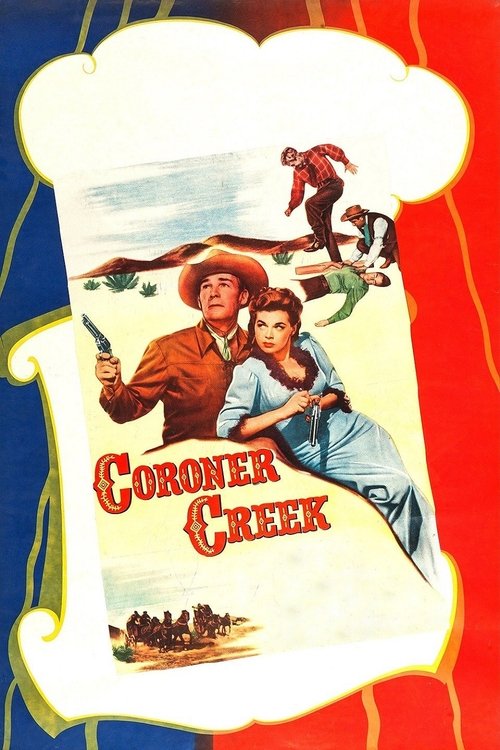
Domino Kid
1957
No user ratings available yet
Representation score: 0.5 out of 10
Representation Score
Minimal
1948
NRDirector
Ray Enright
Runtime
90 minutes
Average Rating
No ratings yetNew Showbiz Analysis
Coroner Creek is a classic Western film that upholds traditional social hierarchies and institutional stability. Its narrative structure prioritizes established social norms over any subversion of these norms. The film relies on conventional clichés, such as a male protagonist driven by revenge for a lost love. This structure limits the roles of female characters and maintains the era's standard of homogeneous casting. Overall, the film reflects the cultural norms of the late 1940s, focusing on maintaining community order through legal institutions while lacking diverse representation.
Category Breakdown
The film does not include any LGBTQ+ characters or narratives. It adheres to the social norms of 1948, where LGBTQ+ identities are not represented.
Female characters play secondary roles, serving mainly as catalysts for male actions rather than as leaders of their own destinies. The story emphasizes traditional gender roles, with men holding positions of power and leadership.
The film features predominantly white, Anglo-Saxon characters, reflecting the homogeneous casting practices of 1940s Hollywood. It portrays these characters as the default norm within the frontier setting.
The story focuses on establishing law and order through the role of the coroner, reinforcing the stability of Western societal structures and traditional morality without challenging them.
There is no documentation indicating the presence of any physical or neurodivergent disabilities in the film.
Present on Screen
Limited or Absent
Official Synopsis
A man is bent on taking revenge on those responsible for his fiancée's death.
1957
1956
1935
1966
1943
1967
1939
1958
No reviews yet. Be the first to share your thoughts on this movie!
Use the rating form above to leave a star rating and optional review.