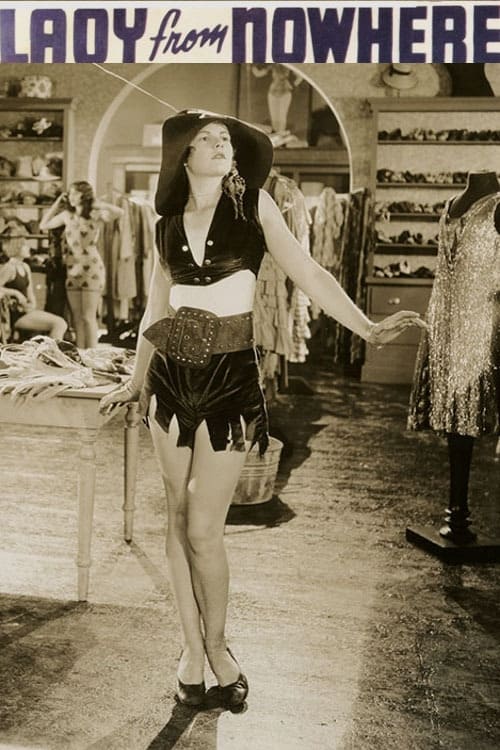
The Lady from Nowhere
1931
No user ratings available yet
Representation score: 0.6 out of 10

Representation Score
Minimal
1931
PassedDirector
Stuart Walker
Runtime
70 minutes
Average Rating
No ratings yetNew Showbiz Analysis
The False Madonna is a crime drama that relies heavily on the cinematic clichés of the early 1930s. The narrative structure revolves around a con artist exploiting a wealthy individual, prioritizing genre conventions over social critique. While the film features a female lead, her role is confined to criminal archetypes. The use of blindness as a plot device suggests a reliance on traditional storytelling methods that use identity as a tool for deception rather than for nuanced representation. Ultimately, the film reflects the era's standard hierarchies, lacking multi-layered depth and focusing on individual morality and class disparity within a likely homogeneous social framework.
Category Breakdown
The film does not include any non-straight or non-cisgender identities. It follows the social norms of the early 1930s, lacking critiques of the assumption that everyone is straight or cisgender.
A female character drives the plot through deception, but her role follows traditional femme fatale stereotypes rather than challenging patriarchal structures.
The story focuses on class-based deception without showing a diverse cast. The production likely reflects the homogeneous casting common in 1931 Hollywood.
The story explores class dynamics and the exploitation of wealth. It does not critique Western institutions or promote secularism.
Blindness serves as a central mechanic for the con artist's deception. This uses disability as a plot catalyst rather than portraying a character with independent ability to act.
Present on Screen
Limited or Absent
Official Synopsis
A woman who is a member of a gang of con artists impersonates the mother of a wealthy blind man.
1931
1922

1938
1931
1933

1951
1939
1929
No reviews yet. Be the first to share your thoughts on this movie!
Use the rating form above to leave a star rating and optional review.