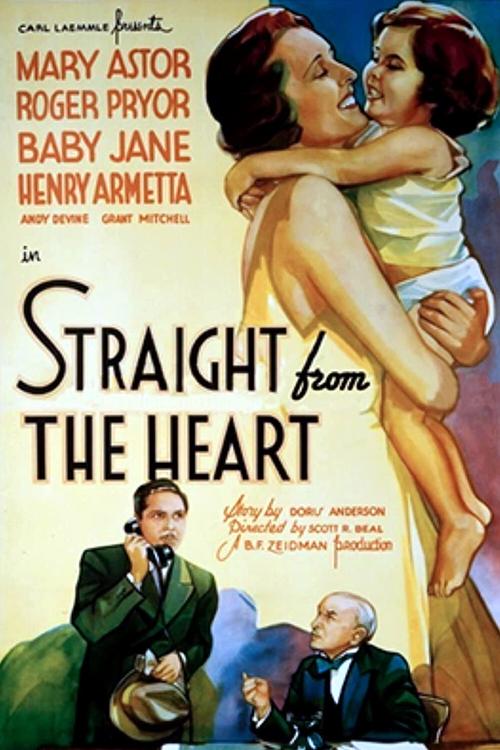
Straight from the Heart
1935
No user ratings available yet
Diversity score: 2.8 out of 10
No Poster Available
1936
ApprovedDirector
Ralph Murphy
Runtime
79 minutes
Average Rating
No ratings yetSynopsis
A wealthy young man writes a play under a different name to prove to his overbearing mother that he can succeed on his own.
Overall Score
Limited
Category Breakdown
LGBTQ+ Representation
The film operates within a traditional heteronormative framework. There is no evidence of non-cisnormative identities or critiques of heteronormativity in the plot.
Gender Representation
The story centers on a conflict between a son and an overbearing mother. This focuses on domestic influence and maternal authority rather than deconstructing gender hierarchies.
Racial & Ethnic Diversity
The film reflects the homogeneous social norms of 1936. There is no evidence of a non-white majority cast or diverse ethnic representation.
Religious & Cultural Diversity
The narrative reinforces traditional values regarding family approval and professional merit. It upholds established social structures rather than challenging them.
Disability Representation
The film contains no information regarding characters with physical or neurodivergent disabilities.
Strengths
Areas for Improvement
AI Analysis
The Man I Marry is a conventional 1930s drama that prioritizes individual achievement and familial reconciliation. Its narrative structure adheres strictly to the social and cultural hierarchies of its era. The film lacks intersectional depth, focusing instead on a protagonist's struggle to prove his worth to a maternal figure. This emphasis on traditional success and domestic dynamics limits its scope of representation. Ultimately, the work functions as a standard studio-era piece, offering little in the way of social subversion or diverse character perspectives.
1935

1934
1935

1934

1932
1931

1939
1935
1934

1931
1921

1931
No reviews yet. Be the first to share your thoughts on this movie!
Use the rating form above to leave a star rating and optional review.