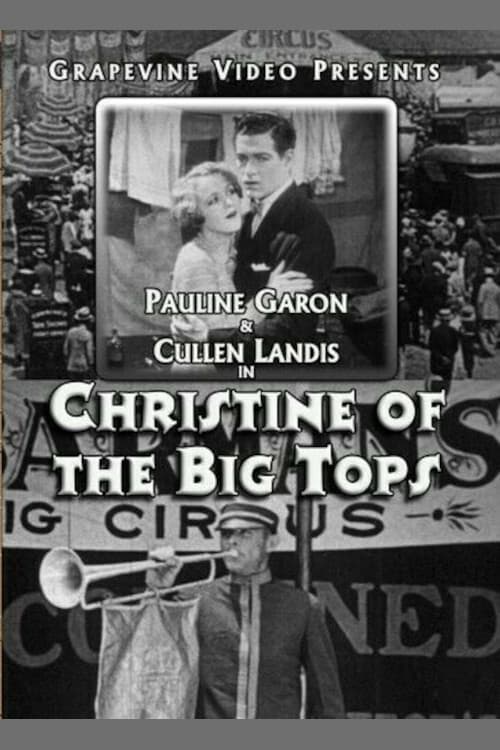
Christine of the Big Tops
1926
No user ratings available yet
Representation score: 1.1 out of 10
Representation Score
Minimal
1928
PassedDirector
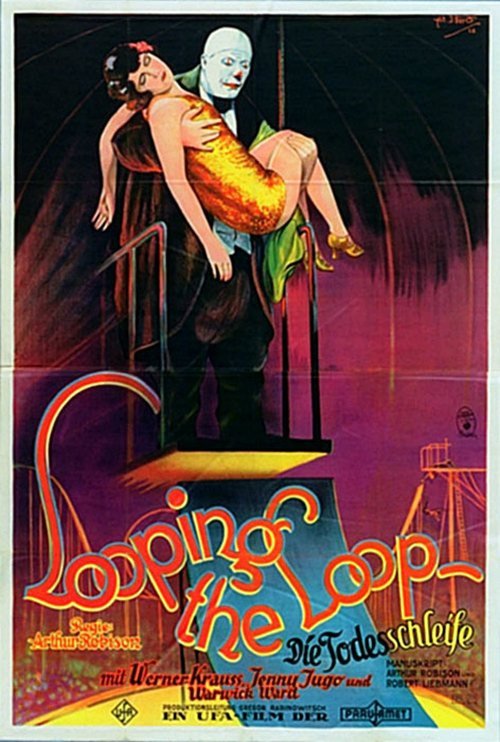
Arthur Robison
Runtime
127 minutes
Average Rating
No ratings yetNew Showbiz Analysis
Looping the Loop is a character-driven romance that adheres to the conventional dramatic structures of the late silent era. The story centers on a standard romantic triangle, emphasizing individual emotional tension over broader social or systemic issues. The film lacks complexity in its portrayal of diverse identities and social norms. It functions as a period-typical melodrama, adhering to the established social and gender norms of 1920s German cinema.
Category Breakdown
The film follows a traditional romantic triangle involving a clown, a young woman, and an acrobat. It does not include any characters with non-traditional gender identities or challenge straight-centered assumptions.
Blanche is the main character, but her actions are largely driven by her attraction to Andre. The dynamics follow a traditional romantic hierarchy without challenging gendered power structures.
The production maintains a homogeneous cast typical of 1928 German cinema. There is no indication of racially diverse casting or efforts to break historical norms.
This melodrama focuses on individual emotional journeys within a circus setting. It does not offer systemic critiques or deconstruct Western institutions and social structures.
Botto the Clown uses performance art and makeup, but there is no evidence that disability or neurodivergence influences the narrative or character development.
Present on Screen
Limited or Absent
Official Synopsis
Botto the Clown is in love with the much younger Blanche but she is in love with the handsome daredevil acrobate Andre.
1926
1956

1926
1928
1923
1927
1929
1945
No reviews yet. Be the first to share your thoughts on this movie!
Use the rating form above to leave a star rating and optional review.