
Women's Prison
1955
No user ratings available yet
Representation score: 5.4 out of 10

Representation Score
Good
1938
Director
Léonide Moguy
Runtime
72 minutes
Average Rating
No ratings yetNew Showbiz Analysis
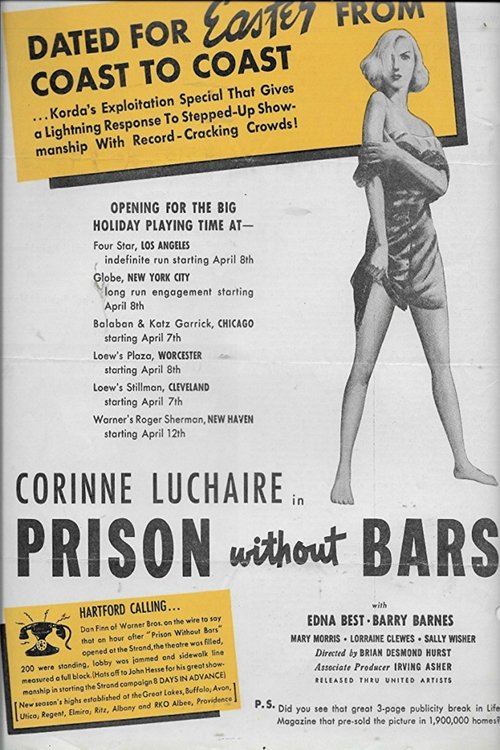
Prison Without Bars is a character-driven drama centered around the clash between two opposing approaches to institutional management. The film's strength lies in its portrayal of women in positions of systemic authority and social critique. While it effectively critiques traditional, punitive structures, it lacks diversity in terms of race, ethnicity, and LGBTQ+ representation. The film also does not address physical or neurodivergent disabilities.
Category Breakdown
The film doesn't include any clear references to LGBTQ+ identities or same-sex relationships. The main focus is on the conflict between the superintendent and the evaluator.
The story challenges traditional hierarchies by emphasizing female leadership and ability to act. Women play key roles in driving the conflict and critiquing societal systems.
The narrative seems to focus on a single social group within a state institution. There is no indication of a multi-ethnic cast driving the plot.
The film criticizes established Western institutions and traditional discipline. It promotes a more progressive, empathetic approach over rigid, punitive traditions.
The film includes teenage girls in a correctional setting, a group often sidelined by society. However, there is no specific mention of physical or neurodivergent disabilities.
Present on Screen
Limited or Absent
Official Synopsis
In a state correctional institute for teenage girls, Madame Appel, the superintendent, rules with an iron fist. The State appoints thirty-year-old Yvonne to evaluate the situation. The young woman is convinced that the girls should feel wanted rather than be constantly subdued and is accordingly determined to make Madame Appel change her methods of education.
1955

1958
1958

1938
1938

1957

1983

1951
No reviews yet. Be the first to share your thoughts on this movie!
Use the rating form above to leave a star rating and optional review.