
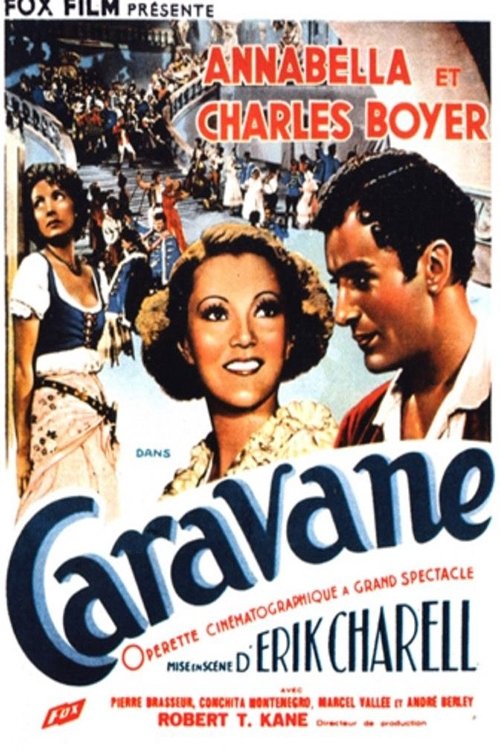
Prince of Arcadia
1933
No user ratings available yet
Representation score: 0.6 out of 10
Representation Score
Minimal
1934
ApprovedDirector
Erik Charell
Runtime
109 minutes
Average Rating
No ratings yetNew Showbiz Analysis
Caravane is a quintessential 1930s musical spectacle that prioritizes grand production values and escapism. While the film features an international, multi-ethnic cast, it does so through an exoticized lens that relies on period-specific archetypes rather than nuanced representation. The narrative is driven by traditional romantic entanglements and rigid social hierarchies. While Princess Wilma displays a moment of impulsive ability to act, the film ultimately reinforces the era's conventional gender roles and class structures. Ultimately, the film functions as a celebration of traditional musical theater. It lacks subversion, opting instead to lean into the romantic and cultural clichés prevalent in early 20th-century European cinema.
Category Breakdown
The film follows strict conventions that assume everyone is straight and cisgender. There are no queer subtexts or non-cisgender identities present.
Princess Wilma briefly takes control by initiating her own marriage to protect her inheritance. However, her actions remain confined within traditional romantic frameworks and standard gender clichés.
A multi-ethnic cast provides visual variety typical of European musicals. However, the narrative uses an exoticized lens, relying on Orientalist archetypes and desert settings rather than deep character's ability to drive the story.
The production prioritizes escapist spectacle over social critique. It reinforces traditional class distinctions and social hierarchies, celebrating lavish musical theater rather than deconstructing Western norms.
There are no documented depictions of physical or neurodivergent disabilities. The characters are presented solely through their roles as musical performers and travelers.
Present on Screen
Limited or Absent
Official Synopsis
Princess Wilma is forced to wed by midnight or lose her inheritance. She impulsively chooses gypsy vagabond Latzi, offering him a huge sum of money if he'll consent. Swallowing his pride, Latzi agrees to the marriage, but soon the coy Countess falls in love with young Lieutenant de Tokay, who is himself in love with Latzi's gypsy sweetheart Tinka. This is the alternate-language version of Caravan
1933
1948
1932
1955
1947

1935

1932
1935
No reviews yet. Be the first to share your thoughts on this movie!
Use the rating form above to leave a star rating and optional review.