Caravane
1934
No user ratings available yet
Representation score: 1.9 out of 10
Representation Score
Limited
1947
ApprovedDirector
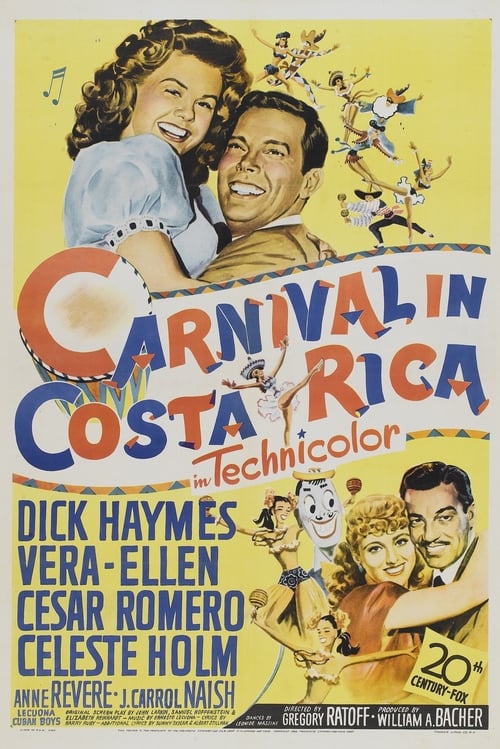
Gregory Ratoff
Runtime
97 minutes
Average Rating
No ratings yetNew Showbiz Analysis
Carnival in Costa Rica is a conventional mid-century musical comedy. It uses an international setting to provide visual variety, but the narrative structure stays true to the escapism of 1940s Hollywood. The story revolves around two pairs of lovers trying to avoid arranged marriages. While this setup allows for individual themes, the film seems designed to meet established romantic expectations rather than challenge social hierarchies. Overall, the work lacks evidence of diverse identity representation or systemic critique, relying instead on the era's standard romantic and social archetypes.
Category Breakdown
The film focuses on two pairs of lovers dealing with romantic conflicts. This setup reinforces the idea that everyone is straight or cisgender without showing any non-traditional gender identities.
Female characters negotiate domestic situations to avoid arranged marriages. While this suggests some active role, their roles likely follow traditional 1940s romantic clichés.
The film is set in Costa Rica, providing a non-Western backdrop. However, it is unclear if the film gives real power to local populations or relies on exoticism.
The plot explores the tension between personal desires and social institutions. The narrative prioritizes traditional romantic ideals over critiquing institutions.
The film does not mention characters with physical or neurodivergent disabilities.
Present on Screen
Limited or Absent
Official Synopsis
Two pairs of lovers try to thwart an arranged marriage at Costa Rican fiesta time.
1934
1951

1967

1958

1944

1937
1966
1957
No reviews yet. Be the first to share your thoughts on this movie!
Use the rating form above to leave a star rating and optional review.