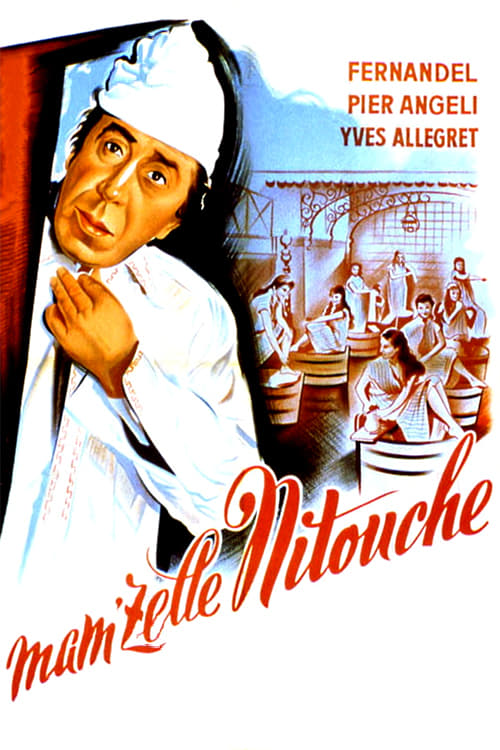
We'll Meet Tonight
1962
No user ratings available yet
Representation score: 2.0 out of 10
Representation Score
Limited
1954
Director
Yves Allégret
Runtime
90 minutes
Average Rating
No ratings yetNew Showbiz Analysis
Mademoiselle Nitouche is a quintessential mid-century musical comedy that prioritizes escapism and traditional narrative resolution. The film relies on established social hierarchies and romantic clichés that align with the cultural standards of 1950s European cinema. The story focuses on a narrow demographic, centering on a European theatrical milieu. It avoids exploring multiple aspects of identity, instead reinforcing social stability through a series of coincidences that lead to a conventional happy ending. Ultimately, the film functions as a genre piece that reflects the traditionalist values of its era. It does not seek to challenge or disrupt conventional expectations regarding gender, race, or social structures.
Category Breakdown
The film follows a traditional romantic storyline typical of mid-century musical comedies. It focuses on heterosexual relationships without showing any non-binary gender identities or same-sex intimacy.
Gender power dynamics rely on well-established comedic clichés. Female characters play key roles in plot complications but operate within the constraints of romantic pursuits typical of the time.
The production is a culturally homogeneous period piece reflecting 1950s French casting norms. It maintains a traditional demographic profile centered on a specific European theatrical environment.
The narrative emphasizes social stability and traditional happy endings. It functions as lighthearted escapism that prioritizes social harmony over critiques of Western institutions or religious structures.
Characters are defined by social roles like organist or soldier rather than physical or neurodivergent experiences. There is no evidence of characters with disabilities being integrated with significant roles.
Present on Screen
Limited or Absent
Official Synopsis
Celestin works as an organist at a girl's school. By day, Celestin is the meek and mild target of the girls' incessant practical jokes. By night, however, he is the celebrated composer of popular operas -- and the romantic vis-à-vis of a celebrated stage star. When schoolgirl Denise stumbles onto Celestin's secret, she threatens to tell all -- but only if Celestin refuses to escort her to the opening night of his latest opera. As a result, Denise falls in love with a handsome young soldier, while Celestin is accidentally shipped off to an army camp. A series of silly coincidences brings happiness to all concerned by fade-out time.
1962
1954
1964
1940
1947
1951

1945
1941
No reviews yet. Be the first to share your thoughts on this movie!
Use the rating form above to leave a star rating and optional review.