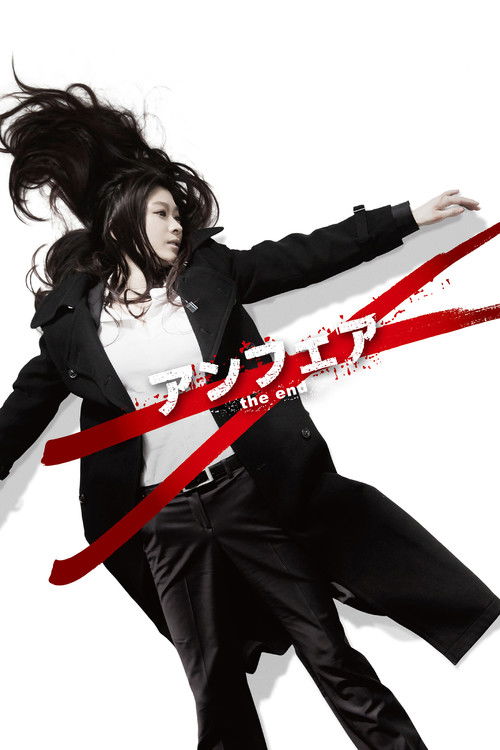
UNFAIR: the end
2015
No user ratings available yet
Representation score: 5.0 out of 10
Representation Score
Fair
2011
Director
Shimako Sato
Runtime
109 minutes
Average Rating
No ratings yetNew Showbiz Analysis
The film stands out by placing a female detective at the center of a high-stakes conspiracy, providing a strong foundation for character-driven procedural action. However, the narrative lacks breadth in other areas, focusing on a homogeneous social setting and institutional corruption. While the film effectively challenges traditional authority structures, it falls short in representing LGBTQ+ identities and disability, resulting in a narrow demographic scope.
Category Breakdown
There is no explicit evidence of LGBTQ+ characters or non-straight relationships in the film.
Natsumi Yukihira, the main character, drives the investigation and handles high-stakes conflicts who play a significant role in driving the story, challenging traditional male-dominated detective roles.
The film takes place in a homogeneous social setting centered around Tokyo and the Japanese police force, with no indication of a multi-ethnic cast or diverse racial dynamics.
The plot critiques institutional hierarchies by portraying a secret organization within the police department, emphasizing individual truth over the stability of established state authority.
The available information does not mention characters navigating physical, neurodivergent, or mental health disabilities.
Present on Screen
Limited or Absent
Official Synopsis
After detective Natsumi Yukihira brings an end to the police hospital terrorist case, Natsumi is transferred to the Nishimonbetsu Police Station in Hokkaido. Meanwhile, a series of grotesque murders occurs in downtown Tokyo involving nails placed in the body of the victims. The fingerprint of Natsumi's ex-husband, freelancer journalist Kazuo Sato, is found on the the body of a victim and Kazuo is placed on the most wanted list. Soon after, Kazuo finds Natsumi and hands her a USB memory stick. The device contains information on a secret organization within the police department. Kazuo tells Natsumi that the series of murders are warnings and suspects become the next victims. Natsumi is then arrested as a suspect. Tokyo prosecutor Katsuaki Murakami appears at the Nishimonbetsu Police Station to investigate.
2015
2008
2007

1998
2006

2011

1995
2012
No reviews yet. Be the first to share your thoughts on this movie!
Use the rating form above to leave a star rating and optional review.