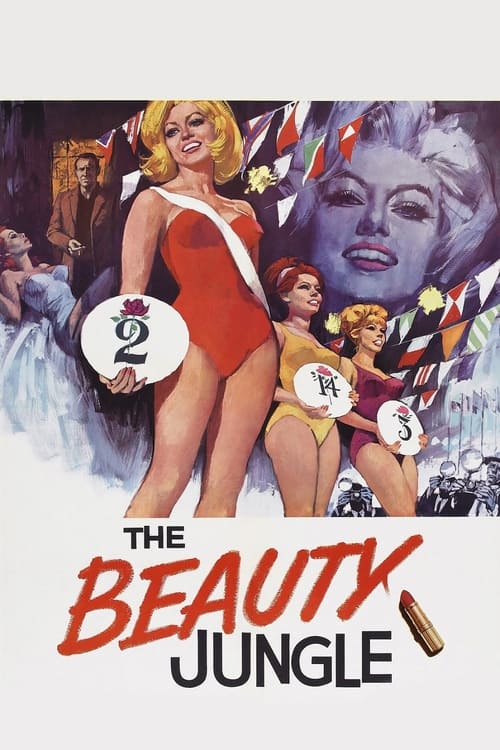
The Beauty Jungle
1964
No user ratings available yet
Diversity score: 2.4 out of 10

1968
GDirector
Michael Gordon
Runtime
92 minutes
Average Rating
No ratings yetSynopsis
The eldest daughter of a professor of psychology at a large conservative university causes havoc, and great embarrassment, for her father with her free-willed and uninhibited lifestyle.
Overall Score
Limited
Category Breakdown
LGBTQ+ Representation
The film lacks prominent LGBTQ+ characters or narratives. The comedic focus remains centered on traditional domestic structures without engaging with queer identities.
Gender Representation
The eldest daughter challenges her father's authority through an uninhibited lifestyle. While she refuses submissive archetypes, the narrative remains tethered to traditional comedic tropes.
Racial & Ethnic Diversity
The cast and setting are predominantly white and British. There is a notable absence of racial or ethnic diversity within this middle-class English environment.
Religious & Cultural Diversity
The story explores the breakdown of formal decorum and social expectations. It functions as a social satire of the middle class rather than a systemic critique.
Disability Representation
There are no meaningful depictions of physical or neurodivergent disabilities. Characters are portrayed through standard comedic archetypes instead.
Strengths
Areas for Improvement
AI Analysis
The film serves as a study of generational friction within a traditional 1968 British middle-class framework. The central conflict relies on the clash between a conservative academic father and his liberated daughter, using her rebellion to drive comedic tension. While the daughter's agency provides a hint of shifting social mores, the film lacks intersectional depth. It operates within the social constraints of its era, focusing on domestic upheaval rather than a deconstruction of institutional power or identity politics. Ultimately, the production is a product of its specific temporal and cultural milieu. It prioritizes the chaos of a household over a broader engagement with multiculturalism, disability, or non-heteronormative identities.
1964
1965
1972
1952

1970
1971
1976
1971
1973
1970

1963
1971
No reviews yet. Be the first to share your thoughts on this movie!
Use the rating form above to leave a star rating and optional review.