
The Divine Order
2017
No user ratings available yet
Representation score: 6.8 out of 10
Representation Score
Limited
1972
PGDirector
Jackie Cooper
Runtime
99 minutes
Average Rating
No ratings yetNew Showbiz Analysis
Jackie Cooper’s film serves as a period-specific social drama that introduces early feminist themes. It captures the shifting gender dynamics of the early 1970s through a protagonist observing her family's adoption of feminist arguments. However, the film remains largely confined to the traditional demographic boundaries of its era, focusing on individualistic moral decision-making within a conventional social framework. The production reflects a homogeneous social environment with minimal racial or LGBTQ+ representation.
Category Breakdown
The film does not include any visible LGBTQ+ characters or explore non-straight relationships. There are no critiques of the assumption that everyone is straight or cisgender.
The story focuses on the liberation of women through the protagonist's interactions with her mother and sister. It engages with feminist ideas, but the conflicts often revolve around adolescent male peer pressure.
The cast is primarily white, reflecting the production standards of 1972 American educational dramas. The setting does not engage with non-Anglo-Saxon perspectives.
The story explores the tension between personal freedom and institutional authority. It highlights the moral necessity of maintaining personal integrity against social conformity.
There are no characters with visible or invisible disabilities. Physical or mental impairments are not used as narrative devices.
Present on Screen
Limited or Absent
Official Synopsis
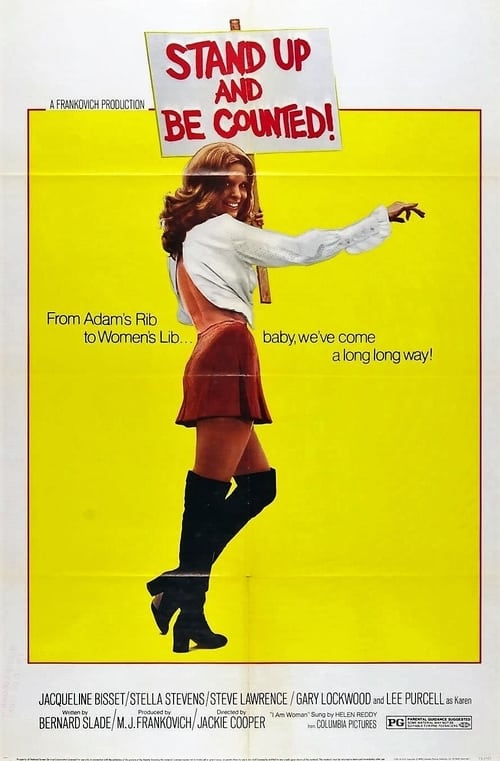
Sheila is a newspaper reporter who returns to her home town in order to write an article about the progress of the liberation of the women. Arriving at the town she is very surprised to see that her sister and also her mother agree very much with the feministic arguments.
2017

1969

1972

2020
1977

1992
1981

1986
No reviews yet. Be the first to share your thoughts on this movie!
Use the rating form above to leave a star rating and optional review.