
Hello Mary Lou: Prom Night II
1987
No user ratings available yet
Representation score: 2.8 out of 10
Representation Score
Limited
1986
RDirector
Mark Ezra, Peter Mackenzie Litten, George Dugdale
Runtime
91 minutes
Average Rating
No ratings yetNew Showbiz Analysis
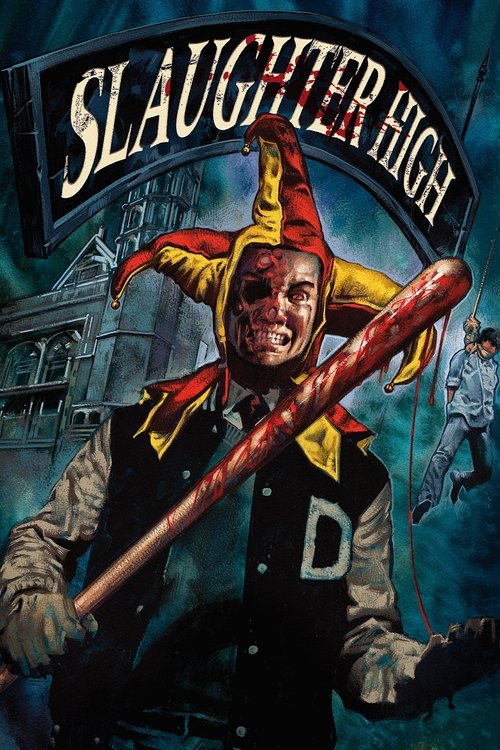
Slaughter High is a conventional 1980s slasher that mirrors the social and demographic constraints of its era. The film relies on established genre clichés and homogeneous casting, prioritizing standard thrills over diverse representation. While the narrative explores a rebellion against school authority, this functions as a genre element rather than a sophisticated critique of institutional structures. The film lacks intentionality in deconstructing social norms. Ultimately, the work remains a product of its time, offering little in the way of progressive representation or the subversion of traditional hierarchies.
Category Breakdown
The film does not include any non-binary or LGBTQ+ characters or same-sex relationships. It follows the assumption that everyone is straight or cisgender, typical of 1980s slasher films.
Female characters play key roles but mainly serve as targets within the slasher framework. Masculinity is shown through typical teenage stereotypes without challenging traditional hierarchies.
The cast is mostly white, reflecting the demographic uniformity of low-budget British horror from this period. There is no indication of diverse casting to challenge historical norms.
The story highlights a breakdown of student-teacher hierarchies through themes of delinquency. However, this serves genre clichés rather than a deliberate critique of Western institutions or religion.
The antagonist's physical disfigurement drives the plot. This leans into the 'vengeful outsider' cliché, using physical difference as a horror device rather than a nuanced exploration of experience.
Present on Screen
Limited or Absent
Official Synopsis
Eight different people are invited to their 10-year high school reunion at their now-closed down high school where a former student, disfigured from a prank gone wrong, is there to seek revenge.
1987
1981

2015
1980
1982
1983
1991
1984
No reviews yet. Be the first to share your thoughts on this movie!
Use the rating form above to leave a star rating and optional review.