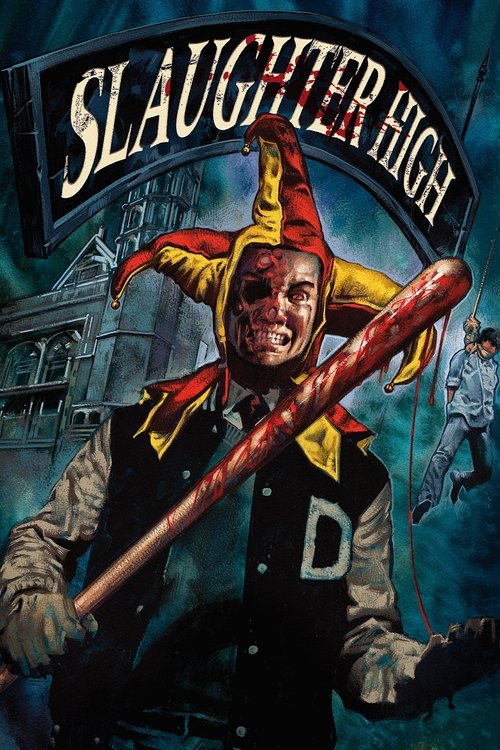
Slaughter High
1986
No user ratings available yet
Representation score: 2.3 out of 10

Representation Score
Limited
2015
Not RatedDirector
Anthony DiBlasi
Runtime
81 minutes
Average Rating
No ratings yetNew Showbiz Analysis
Most Likely to Die is a traditional slasher film that focuses on genre mechanics rather than social commentary. The narrative relies on well-known clichés, such as the high school reunion and the targeting of popular students, to create tension and suspense. While the film features a diverse cast of young adults, it does not use these characters to explore identity or systemic power dynamics. Instead, the focus remains on visceral horror and physical survival scenarios. Overall, the film operates within a narrow framework that avoids challenging conventional social expectations or representing underrepresented perspectives.
Category Breakdown
The film follows typical conventions where everyone is assumed to be straight. There are no characters or stories that challenge traditional views on sexuality or gender.
Women play key roles in the survival storyline but their actions are mostly reactive to the threats posed by the antagonists. their ability to act is limited to responding to external dangers.
The cast includes a mix of students, but there are no characters of color given significant roles or ability to act. The film does not elevate characters of color beyond typical high school stereotypes.
The setting is used primarily for horror purposes without engaging in deeper social or cultural commentary. The film does not address broader ideological or systemic issues.
Characters are defined by their physical abilities and high school achievements. There is no meaningful inclusion of characters with disabilities, either physical or cognitive.
Present on Screen
Limited or Absent
Official Synopsis
A group of former classmates gather for a pre-party at one of their homes the night before their 10-year high school reunion, and one by one, they are brutally slain in a manner befitting each's senior yearbook superlative.
1986
1980

2012

2010
2021

2008
2013

2020
No reviews yet. Be the first to share your thoughts on this movie!
Use the rating form above to leave a star rating and optional review.