Looking for Mushrooms
1967
No user ratings available yet
Representation score: 1.7 out of 10
Representation Score
Fair
1996
Director
Bruce Conner
Runtime
15 minutes
Average Rating
No ratings yetNew Showbiz Analysis
Bruce Conner’s psychedelic travelogue disrupts Western rationalism by centering the Mexican landscape and the pursuit of altered consciousness. By utilizing non-linear montage, the film challenges the stability of the observed world and favors a non-conformist mode of existence. However, the film's experimental structure limits its ability to represent specific identities. Because it lacks character-driven ability to act, it cannot engage with gendered arcs, LGBTQ+ identities, or disability representation, resulting in neutral scores for those categories. Ultimately, the work functions as a critique of traditional cultural hierarchies. It trades character depth for a postmodern exploration of perception, making it a significant piece of avant-garde cinema.
Category Breakdown
The film does not provide specific dialogue or narrative arcs to identify LGBTQ+ identities. However, its psychedelic approach to perception challenges the assumption that everyone is straight or cisgender.
As a non-narrative montage, the work does not engage with traditional gender hierarchies or archetypes. There are no depictions of domesticity, leadership, or submissive roles present.
The film centers the Mexican landscape, elevating non-Western environments as central to the exploration of consciousness. This focus disrupts the Western-centric gaze common in mid-century documentary styles.
The film subverts Western institutional authority by focusing on the pursuit of altered states of consciousness. It prioritizes subjective, experiential truth over rigid, rationalist social structures.
The experimental, montage-based nature of the work contains no identifiable characters or depictions of disability, neurodivergence, or physical impairment.
Present on Screen
Limited or Absent
Official Synopsis
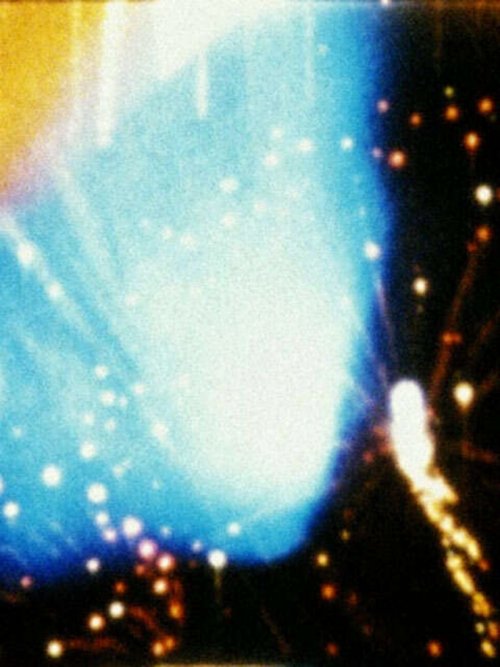
LOOKING FOR MUSHROOMS (1959-1967) is a psychedelic travelogue film that documents a series of “trips” through rural Mexico and urban America. Conner combined street views of San Francisco shot in the late 1950s with scenes of rural Oaxaca captured during his “mushroom-hunting” excursions between 1961 and 1962, when Bruce and his wife, Jean, were living in Mexico City. On at least one of these trips, the Conners were joined by Timothy Leary, the ex-Harvard professor and soon-to-be leading proponent of psychedelic drugs. In 1996, Conner revised the film once again: he used an optical printer to expand its length from three to fourteen-and-a-half-minutes, and added a new soundtrack, Terry Riley's "Poppy Nogood and the Phantom Band," to create a more meditative, but no less hypnotizing, iteration of the mushroom hunt.
1967
1983
1976
2020
2008
2020
1976
2015
No reviews yet. Be the first to share your thoughts on this movie!
Use the rating form above to leave a star rating and optional review.