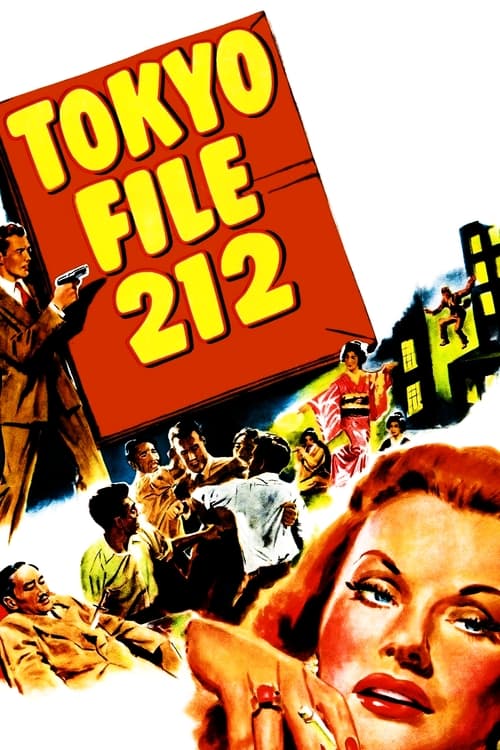
Tokyo File 212
1951
No user ratings available yet
Representation score: 1.2 out of 10
Representation Score
Minimal
1948
NRDirector
Gordon Douglas
Runtime
91 minutes
Average Rating
No ratings yetNew Showbiz Analysis
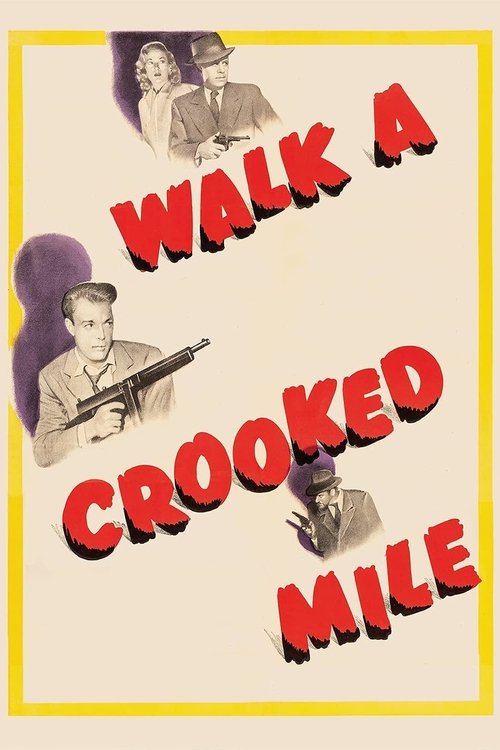
Walk a Crooked Mile is a traditional mid-century procedural that prioritizes institutional integrity and national security. The narrative focuses on the collaboration between the FBI and Scotland Yard to prevent espionage at an atomic plant. Because the film centers on upholding established legal frameworks and state stability, it functions to reinforce existing social hierarchies. The storytelling follows standard genre conventions of the era rather than attempting to deconstruct social norms. Ultimately, the film lacks depth in representing diverse identities, presenting a world defined by traditional authority and conventional demographic representations common to 1948 cinema.
Category Breakdown
The film adheres to the straight-centered social structures typical of mid-century crime dramas. There is no evidence of queer subtext or non-cisgender identities within the narrative.
Leadership and investigative roles are centered on male protagonists. This reflects 1940s cinematic hierarchies where authority is predominantly assigned to men, leaving female roles secondary.
The production likely follows the homogeneous casting norms of the late 1940s. There is no indication of a diverse cast or any subversion of Anglo-Saxon-centric demographics.
The story emphasizes Western patriotism and the defense of state institutions. It reinforces the importance of law enforcement and national stability rather than critiquing these structures.
The available information provides no evidence regarding the inclusion or portrayal of characters with physical or neurodivergent disabilities.
Present on Screen
Limited or Absent
Official Synopsis
A security leak is found at a Southern California atomic plant. The authorities stand in fear that the information leaked would go to a hostile nation. To investigate the case more efficiently, Dan O'Hara, an FBI agent, and Philip Grayson, a Scotland Yard sleuth, join forces. Will they manage to stop the spy ring from achieving their aim?
1951

1953
1956
1946
1958

1950
1955
1946
No reviews yet. Be the first to share your thoughts on this movie!
Use the rating form above to leave a star rating and optional review.