
Shield for Murder
1954
No user ratings available yet
Representation score: 2.6 out of 10
Representation Score
Minimal
1954
NRDirector
Don Siegel
Runtime
81 minutes
Average Rating
No ratings yetNew Showbiz Analysis
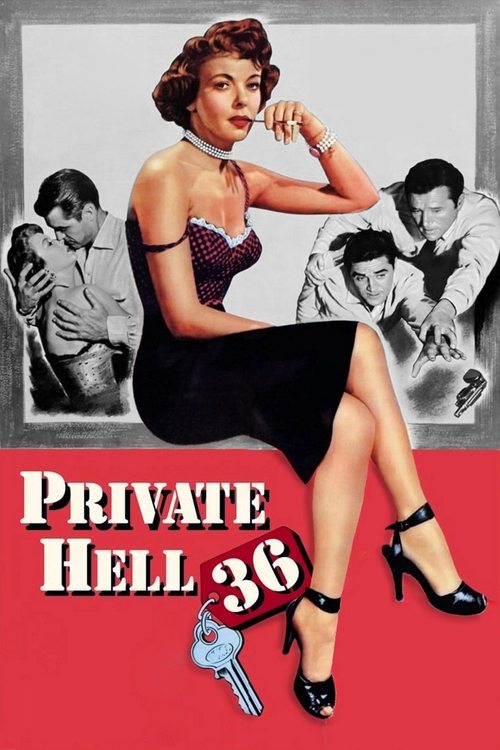
Private Hell 36 is a quintessential mid-century crime noir that emphasizes genre conventions over social subversion. The story follows a standard investigative procedure, focusing on the moral decay of its central characters. The film adheres to the era's cinematic standards, highlighting individual ethical struggles without challenging institutional frameworks. While it introduces character complexity through corruption, it lacks diverse representation. Ultimately, the work operates within a traditional framework, offering limited disruption to the prevailing social hierarchies of the 1950s.
Category Breakdown
The film does not include any characters with non-straight identities. It focuses on a traditional crime investigation involving male detectives and a female singer, following conventional social norms.
Lilli plays a significant role in assisting the detectives, showing some control over her actions. However, the central moral conflict revolves around the male protagonists, reflecting the gender hierarchies of the time.
The story involves locations such as New York and Los Angeles but does not feature any non-white characters. This likely reflects the homogeneous casting practices typical of 1950s crime dramas.
The story delves into individual morality and corruption through Cal's ethical failings. It operates as a classic crime drama without critiquing broader societal structures.
There are no characters with visible or invisible disabilities mentioned in the narrative.
Present on Screen
Limited or Absent
Official Synopsis
In New York City, a bank robbery of $300,000 goes unsolved for a year, until some of the marked bills are found in a Los Angeles drugstore theft. Police detectives Cal Bruner and Jack Farnham investigate and are led from the drugstore to a nightclub, where singer Lilli is another recipient of a stolen bill. With Lilli's help, the partners track down the remaining money, but both Lilli and Jack are dismayed when Cal decides he wants to keep part of it.
1954
1972
1947
1949
1957
1948
1948
1946
No reviews yet. Be the first to share your thoughts on this movie!
Use the rating form above to leave a star rating and optional review.