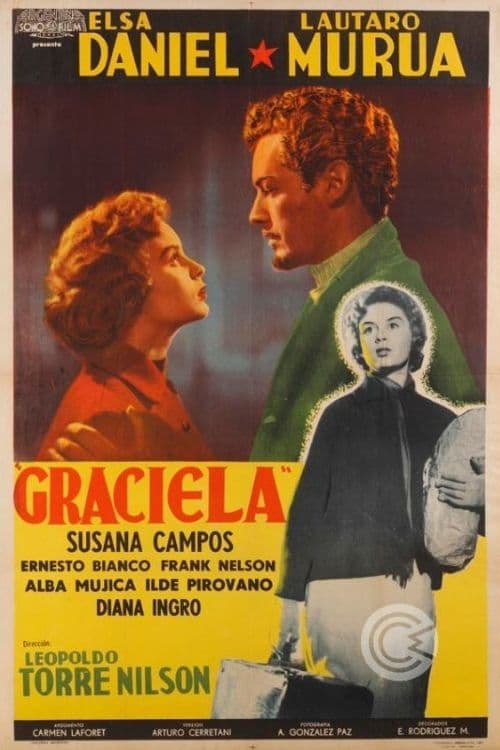
Graciela
1956
No user ratings available yet
Representation score: 4.5 out of 10
Representation Score
Fair
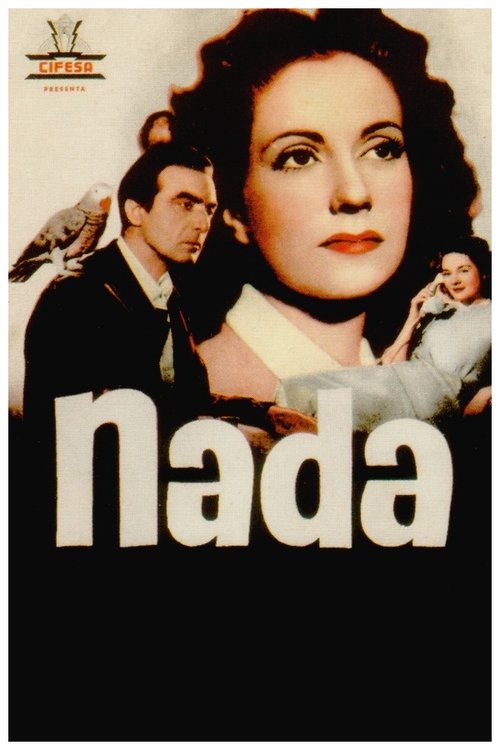
1947
Director
Edgar Neville
Runtime
76 minutes
Average Rating
No ratings yetNew Showbiz Analysis
Edgar Neville’s *Nada* is a sophisticated social satire that emphasizes character eccentricity over rigid social norms. It offers a nuanced look at individual control within the traditional structures of post-war Spain. While the film provides meaningful depth to female characters, it remains culturally specific and historically grounded. It lacks the complexity of multiple aspects of identity or explicit challenges to identity politics found in modern cinema. The narrative primarily observes urban life and domestic friction, rather than systematically dismantling social hierarchies.
Category Breakdown
The film focuses on family conflicts and social interactions within a traditional framework. It does not include explicit representations of LGBTQ+ identities or narratives that question the assumption that everyone is straight.
Female characters have distinct personalities and play significant roles in their social circles. However, the film does not explicitly challenge traditional gender hierarchies.
The cast is predominantly uniform, reflecting the specific mid-century Spanish urban context. There is no indication of intentional racial diversity or varied casting.
As a social satire, the film critiques social customs and the absurdities of daily life. It does not contain overtly anti-religious or anti-capitalist messages.
There is no prominent depiction of characters with visible or invisible disabilities. Disability is not used as a central narrative driver or tool for character development.
Present on Screen
Limited or Absent
Official Synopsis
When young Andrea arrives in Barcelona to begin her university studies, she stays at her aunt Angustias' house, where she lives with several relatives with whom she has constant arguments.
1956
2015
1959
1976
1962

1973

1970

1961
No reviews yet. Be the first to share your thoughts on this movie!
Use the rating form above to leave a star rating and optional review.