
Georgia O'Keeffe: By Myself
2016
No user ratings available yet
Representation score: 5.0 out of 10
Representation Score
Fair
2015
Not RatedDirector
Lisa Immordino Vreeland
Runtime
97 minutes
Average Rating
No ratings yetNew Showbiz Analysis
The documentary excels at challenging traditional gender roles, elevating a woman from a mere muse to a primary architect of cultural movements. It successfully highlights female leadership and intellect within patriarchal art history. However, the film's scope is narrow, focusing almost exclusively on the Euro-American avant-garde. This results in a lack of racial and multi-layered depth, as the social circles remain largely homogeneous. While the film captures a bohemian lifestyle that challenges mid-century social norms, it lacks explicit focus on formal LGBTQ+ identities or a critique of the socioeconomic structures that enabled Guggenheim's influence.
Category Breakdown
The film portrays a bohemian social fabric that challenges mid-century expectations. While it doesn't focus on formal LGBTQ+ political narratives, Guggenheim's fluid personal life questions the era's rigid moralities.
Peggy Guggenheim is shown as a central figure who drives change rather than a passive socialite. The film challenges traditional hierarchies by presenting her as a powerful leader in male-dominated art markets.
The documentary focuses primarily on the Euro-American avant-garde movement. The social circles and artists depicted remain largely homogeneous, lacking diverse racial narratives.
The narrative emphasizes secular, avant-garde values over traditional religious frameworks. However, it does not actively critique the Western institutions or capitalism that supported Guggenheim's high-status patronage.
There is no significant focus on visible or invisible disabilities. Characters with disabilities are not used as central plot devices within the film.
Present on Screen
Limited or Absent
Official Synopsis
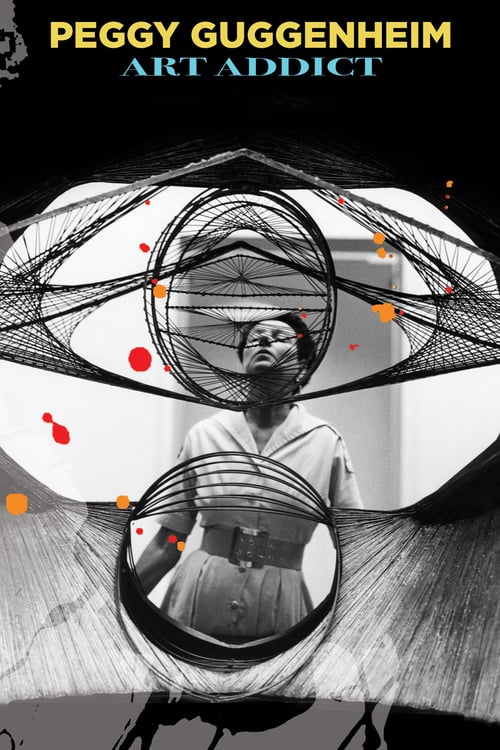
Bouncing between Europe and the United States as often as she would between lovers, Peggy Guggenheim’s life was as swirling as the design of her uncle’s museum, and reads more like fiction than any reality imaginable. Peggy Guggenheim – Art Addict offers a rare look into Guggenheim’s world: blending the abstract, the colorful, the surreal and the salacious, to portray a life that was as complex and unpredictable as the artwork Peggy revered and the artists she pushed forward.
2016
2014
2012

2018
2016

2021
2015
1973
No reviews yet. Be the first to share your thoughts on this movie!
Use the rating form above to leave a star rating and optional review.