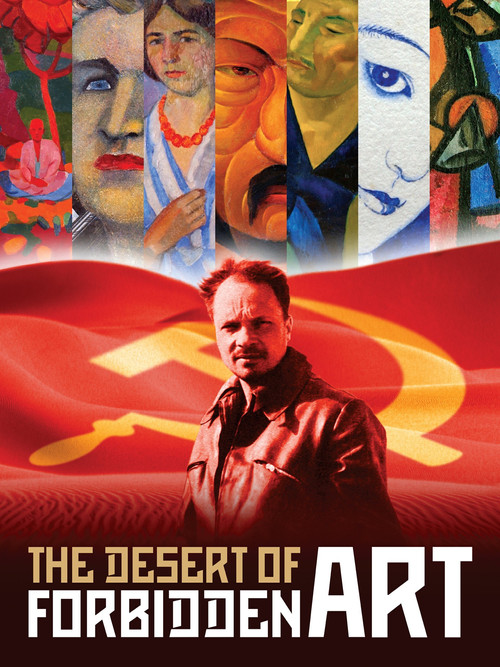
The Desert of Forbidden Art
2011
No user ratings available yet
Representation score: 8.5 out of 10
Representation Score
Fair
2017
Director
Margy Kinmonth
Runtime
85 minutes
Average Rating
No ratings yetNew Showbiz Analysis
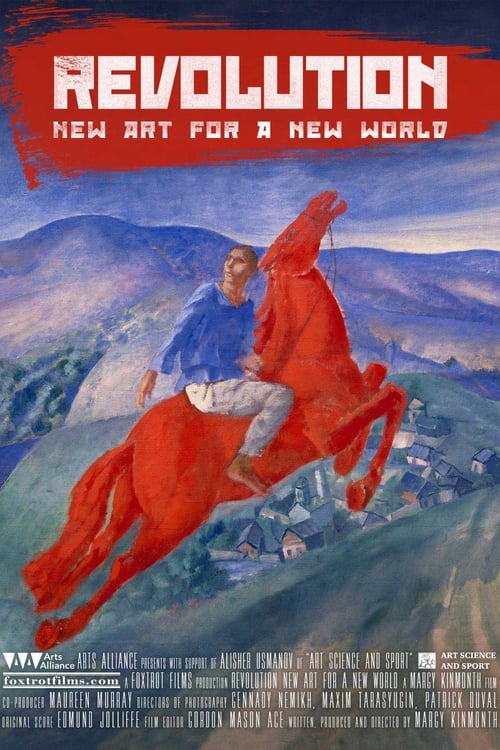
Revolution: New Art for a New World successfully reconfigures the art historical canon by elevating female pioneers of the Russian Avant-Garde. By focusing on figures like Popova and Goncharova, the documentary challenges the male-dominated narratives typically found in art history. However, the film's narrow historical and geographic scope limits its broader diversity reach. The focus on European artists and the lack of explicit LGBTQ+ narratives constrain its inclusivity. The documentary primarily serves as a critique of how totalitarian regimes suppress individual creative freedom, trading broad demographic representation for a deep, critical look at systemic impacts.
Category Breakdown
The film does not explicitly represent LGBTQ+ identities or same-sex relationships. While the historical context suggests a challenge to traditional views, there is no overt representation of these identities.
The film disrupts the traditional male-centric art history by focusing on female artists such as Natalia Goncharova and Lyubov Popova. These women are shown as intellectual leaders and creators rather than passive subjects.
The film primarily focuses on Caucasian and European artists, reflecting the historical context of the Russian Avant-Garde but limiting racial diversity.
The documentary effectively deconstructs traditional religious and monarchical structures, highlighting the shift towards secular, communist frameworks as a period of artistic liberation and subversion of traditional morality.
There is no significant portrayal of visible or invisible disabilities within the film's historical focus.
Present on Screen
Limited or Absent
Official Synopsis
Drawing on the collections of major Russian institutions, contributions from contemporary artists, curators and performers and personal testimony from the descendants of those involved, the film brings the artists of the Russian Avant-Garde to life. It tells the stories of artists like Chagall, Kandinsky and Malevich - pioneers who flourished in response to the challenge of building a new art for a new world, only to be broken by implacable authority after 15 short years and silenced by Stalin's Socialist Realism.
2011
2012
2019
2025
2016
2016
2020
2015
No reviews yet. Be the first to share your thoughts on this movie!
Use the rating form above to leave a star rating and optional review.