
The Enigma of the Folies-Bergère
1959
No user ratings available yet
Representation score: 3.3 out of 10
Representation Score
Limited
1961
Director
Robert Hossein
Runtime
80 minutes
Average Rating
No ratings yetNew Showbiz Analysis
The film operates as a closed-room psychological study aimed at dismantling the curated personas of the upper class. It prioritizes the deconstruction of social facades and interpersonal hierarchies over demographic variety. While the narrative offers a critique of established social structures, it remains anchored in the conventional casting and social frameworks of 1961. The focus is on moral ambiguity rather than diverse representation.
Category Breakdown
The film delves into personal secrets through a psychological game, suggesting a potential challenge to traditional social norms. However, there is no clear indication of queer identities.
The story centers on the tension between guests and their private realities, hinting at a challenge to the era's social norms. Yet, it lacks clear evidence of subverting gender hierarchies.
The setting features a homogeneous group of elegant people in a French mansion, indicating a Eurocentric social circle with little evidence of racial or ethnic blending.
The story critiques the stability of high-society institutions through a lens of moral relativism, rejecting cohesive morality in favor of exposing individual hypocrisy and situational ethics.
There is no information regarding the inclusion or portrayal of characters with physical or neurodivergent disabilities.
Present on Screen
Limited or Absent
Official Synopsis
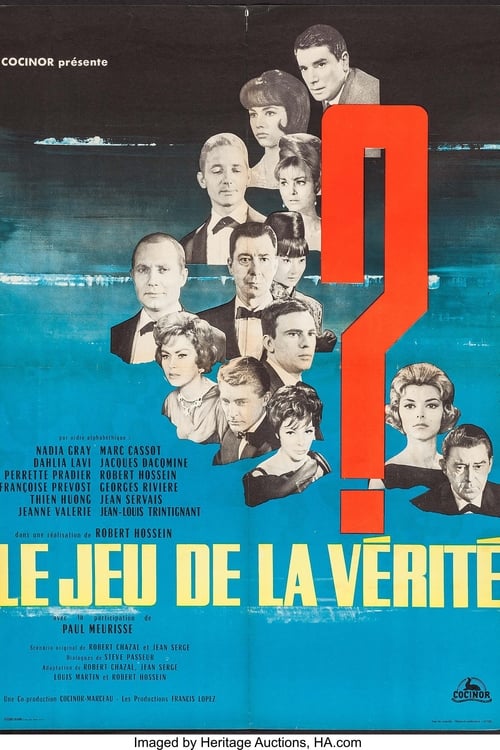
A dozen elegant people are gathered in a writer's desirable mansion. In the grand tradition of Agatha Christie, they all have something to hide.They begin a cruel game of truth, a game where you're not supposed to tell lies. As the questions become more and more intimate and precise, the tempers rise, while outside the storm is raging. Enter a hateful person (played by Paul Meurisse, the nasty headmaster in "Les Diaboliques") who seems to know a lot about them. Someone is murdered. Whodunit?
1959

1973

1985
1945
1935

1983

1959

1964
No reviews yet. Be the first to share your thoughts on this movie!
Use the rating form above to leave a star rating and optional review.