
Pretoria to Durban
1952
No user ratings available yet
Representation score: 0.3 out of 10
Representation Score
Minimal
1937
ApprovedRuntime
9 minutes
Average Rating
No ratings yetNew Showbiz Analysis
This 1937 travelogue functions as a traditional colonial-era document, focusing on topographical and architectural observations. The narrative structure centers on European legacies and the historical impact of figures like Cecil John Rhodes. Because the film focuses on landmarks and colonial development, it lacks character-driven ability to act or interpersonal dynamics. The perspective aligns with the era's standard socio-cultural constraints, offering little to no representation of underrepresented groups. Ultimately, the film serves to celebrate Western institutional history and colonial milestones rather than providing a diverse or critical view of South Africa.
Category Breakdown
The film does not include any LGBTQ+ characters or non-cisgender identities. It does not address issues related to the assumption that everyone is straight or cisgender.
The focus remains on historical legacies and male figures such as Cecil John Rhodes. There is no evidence of women's ability to drive the story or challenges to traditional gender hierarchies.
The narrative emphasizes European colonial history and the legacies of settlers. While Durban is mentioned as a former native town, the focus remains on colonial landmarks.
The work reinforces Western historical narratives by highlighting colonial-era architecture and milestones. It lacks anti-colonial sentiments or diverse cultural perspectives.
There is no information available regarding the depiction of physical or neurodivergent identities in this travelogue.
Present on Screen
Limited or Absent
Official Synopsis
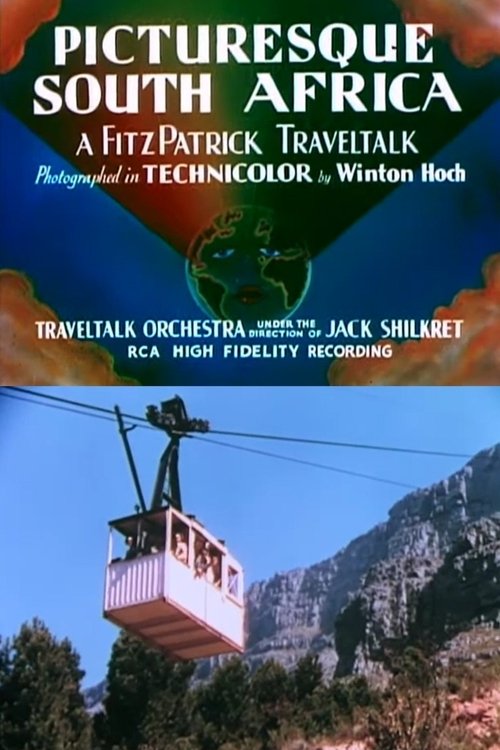
South Africa has a long history of colonialism by among others the Portuguese, French, Dutch and British. This travelogue begins in Cape Town, one of the most important ports in the world. It is located at the meeting of the Atlantic and Indian Oceans. Table Mountain overlooks the city. At the peak's summit, one can get a magnificent view of the city and surrounding coastline below. Diamond miner and Englishman Cecil John Rhodes, known for the scholarship named after him, bequeathed a house to the state to be used as the home for the prime minister, this house which is the most colorful building in Cape Town. There is also a memorial to Rhodes at the side of Table Mountain. The next stop on the journey is the city of Durban, which has grown from a small native town to one of the largest and most important cities in South Africa.
1952
1952
1939
1937
1952
1939
1936
1938
No reviews yet. Be the first to share your thoughts on this movie!
Use the rating form above to leave a star rating and optional review.