Szamba
1996
No user ratings available yet
Representation score: 3.6 out of 10
Representation Score
Good
1986
Director
Péter Gothár
Runtime
112 minutes
Average Rating
No ratings yetNew Showbiz Analysis
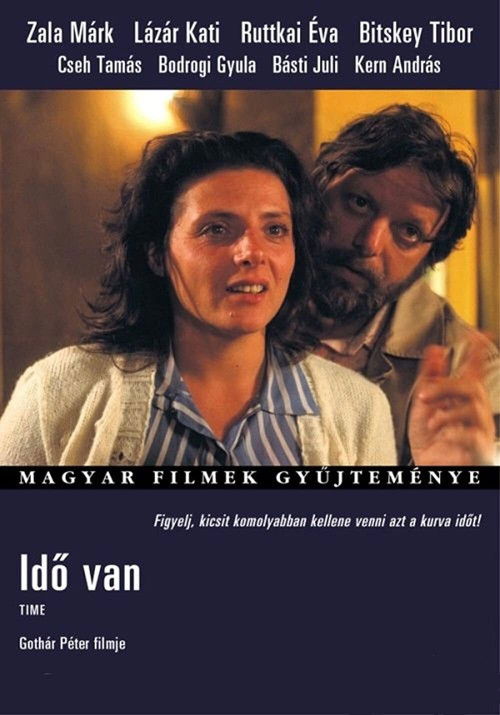
Time is a sophisticated work that prioritizes ideological critique over demographic diversity. It uses a postmodern lens to challenge the stability of domesticity and the effectiveness of state-driven social structures. While the film lacks significant visible representation regarding race and LGBTQ+ identity, it succeeds in its cultural critique. It replaces traditional social certainties with a profound exploration of human disconnection and social decay.
Category Breakdown
The film focuses on a nuclear family experiencing systemic confusion. There are no explicit representations of non-traditional gender identities or same-sex relationships.
The story challenges traditional gender roles by shifting the caregiver and provider roles during a family crisis. It avoids reinforcing stable masculine leadership.
Set in 1980s Hungary, the film reflects the homogeneous demographics of its time. The narrative emphasizes class and existential fragmentation rather than ethnic or racial diversity.
The film effectively critiques systemic structures using surrealism. It portrays a society defined by alienation and social decay under hollow communist ideals.
The wife's unexplained illness introduces themes of physical and psychological vulnerability. However, it is unclear if this illness serves as a nuanced exploration of personal ability to act or a metaphor.
Present on Screen
Limited or Absent
Official Synopsis
Peter Gothar films give a sharp, uncensored view of the society. This film is no different. The plot is rather simple: a family goes to vacation with the usual stress. Then on the vacation the wife gets a strange kind of sickness and they go back to Budapest for a cure. While the wife is in the hospital, the husband visits his family. This is quite banal. However the scenario was written by Peter Esterhazy, one of the most influential contemporary writers in Hungary. His style uses a lot of surrealism but in a way that profoundly illuminates the reality. In this film, the reality is an atomized society where the so-called communist ideals are nowhere so everyday people are fully disoriented.
1996
1989
1989
2006

1997
1969
1992
1978
No reviews yet. Be the first to share your thoughts on this movie!
Use the rating form above to leave a star rating and optional review.