Citizen
2014
No user ratings available yet
Representation score: 6.8 out of 10
Representation Score
Good
1989
Director
Andrzej Kotkowski
Runtime
112 minutes
Average Rating
No ratings yetNew Showbiz Analysis
Citizen Piszczyk functions as a satirical critique of Polish political history. It uses humor to dismantle the perceived stability of state institutions and systemic authority. The film's strength lies in its cultural critique and subversion of traditional gender roles. By centering a protagonist defined by misfortune, it challenges standard heroic clichés. However, the film remains limited by its narrow demographic focus. It lacks LGBTQ+ representation and ethnic diversity, remaining rooted in a specific, homogeneous historical landscape.
Category Breakdown
The film does not include explicit representations of non-binary genders or same-sex relationships. The main relationship portrayed is a traditional heterosexual pairing.
A politically engaged woman drives the plot through her social influence and family connections. The protagonist challenges traditional masculinity by being a victim of systemic misfortune.
The film depicts a relatively homogeneous population within its specific Polish historical context. The narrative emphasizes class and political identity over ethnic diversity.
The film provides a strong critique of state institutions and systemic oppression. It frames the protagonist as a victim of Stalinist distortions, challenging institutional authority.
The protagonist's bad luck serves as a metaphor for systemic exclusion. He is positioned as a recipient of external forces rather than a self-actualized agent.
Present on Screen
Limited or Absent
Official Synopsis
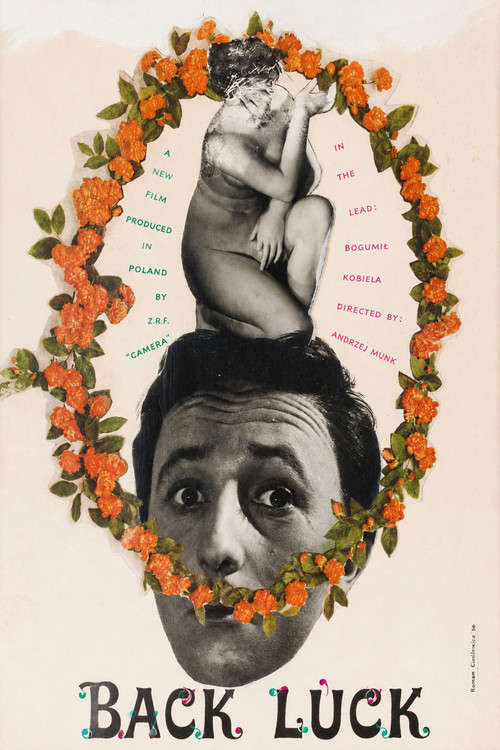
This film is a sequel to Munk's Zezowate Szczescie and it's much the same, only more so. The film begins in a cinema, where the last scenes of Zezowate Szczescie are being shown. Born unlucky, a victim of the errors and distortions of Stalinism, he is released in 1956. He meets a politically feverish woman, her influential parents, and finally becomes the father of her child. But bad luck, or perhaps an unlucky era, will not let him forget.
2014
1985
1969

1989
1992
1960
2003
1994
No reviews yet. Be the first to share your thoughts on this movie!
Use the rating form above to leave a star rating and optional review.