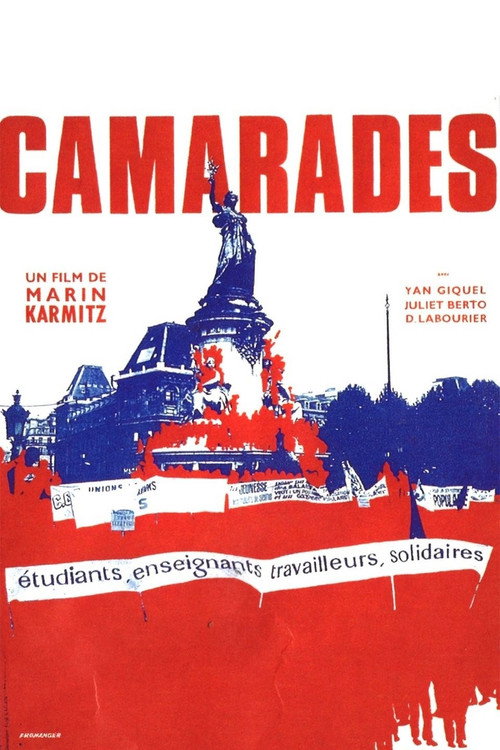
Comrades
1970
No user ratings available yet
Representation score: 4.0 out of 10
Representation Score
Good
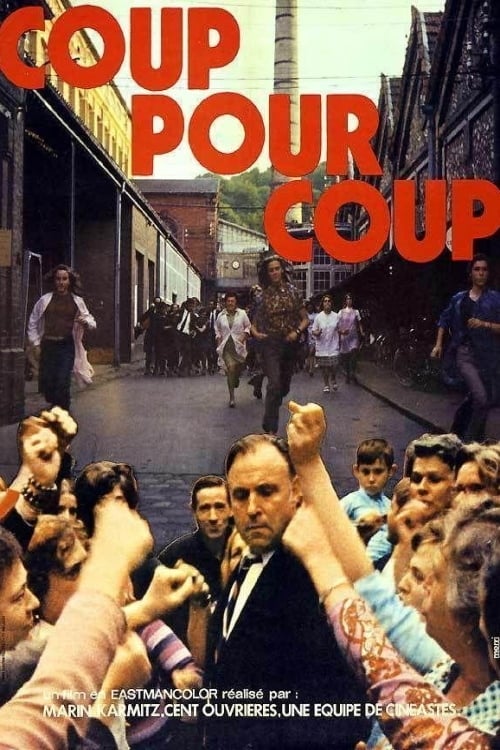
1972
Director
Marin Karmitz
Runtime
89 minutes
Average Rating
No ratings yetNew Showbiz Analysis
Blow for Blow is a social realist drama that prioritizes the friction between labor and capital. By centering on a textile factory strike, the film disrupts traditional hierarchies and examines systemic power dynamics through collective action. The film excels at portraying the ability to act of the working class. It uses the factory occupation to critique established Western economic structures and institutional authority. However, the narrative's focus on socio-economic struggle means identity-based representation, such as LGBTQ+ or disability, is not a primary feature of the story.
Category Breakdown
The film focuses on class struggle and industrial labor. There is no explicit detail regarding non-straight relationships within the narrative.
The textile factory setting likely centers on female workers. The strike portrays women as organized, politically active agents rather than passive figures.
The narrative centers on the French working class of the early 1970s. While ethnicity may intersect with class, the primary driver is socio-economic status.
The film aligns with progressive themes by critiquing capitalist institutions. It portrays factory occupation as a legitimate form of empowerment and collective struggle.
There is no evidence to suggest that disability or neurodivergence plays a central role in the narrative arc.
Present on Screen
Limited or Absent
Official Synopsis
The film describes a strike in a French textile factory, when the striking workers occupy the factory.
1970
1963
1972
1925

2023

1954

1970
1987
No reviews yet. Be the first to share your thoughts on this movie!
Use the rating form above to leave a star rating and optional review.