
Novitiate
2017
No user ratings available yet
Representation score: 7.7 out of 10
Representation Score
Fair
2008
PG-13Director
John Patrick Shanley
Runtime
104 minutes
Average Rating
No ratings yetNew Showbiz Analysis
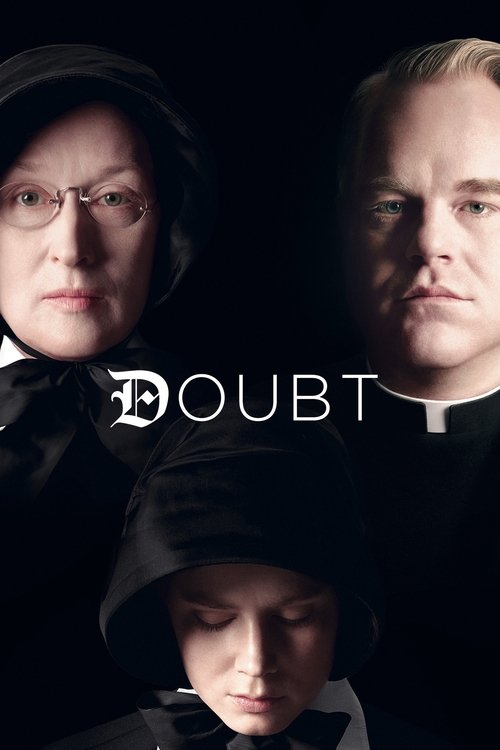
Doubt is a sophisticated exploration of narrative ambiguity that challenges institutional authority. It centers on female intellect and the questioning of absolute truths within a rigid religious framework. Despite its homogeneous demographic and historical context, the film achieves depth through psychological complexity. The tension between individual morality and institutional preservation provides a strong intellectual foundation. However, the film's limited representation of certain identities and lack of diverse characters restrict its broader impact.
Category Breakdown
The film doesn't include explicit LGBTQ+ characters or identities. Instead, it explores social perceptions through ambiguity surrounding Father Flynn’s behavior.
The story challenges traditional hierarchies by emphasizing women's ability to drive the story and intellectual leadership. Sister Aloysius holds significant authority, making women the main drivers of the plot within a patriarchal institution.
Set in a 1964 Bronx school, the cast is mostly white and Irish-Catholic. An African-American student introduces racial tension, but the focus remains on institutional and theological issues.
The film critically examines the Catholic Church, showing a hierarchy focused on preserving the institution. It questions absolute certainty through moral relativism and situational ethics.
There are no prominent characters with physical or neurodivergent disabilities that drive the narrative or influence character's ability to drive the story.
Present on Screen
Limited or Absent
Official Synopsis
In 1964 Bronx, two Catholic school nuns question the new priest's ambiguous relationship with a troubled African-American student.
2017
1961

2018
1985
2006
1995
2004
1977
No reviews yet. Be the first to share your thoughts on this movie!
Use the rating form above to leave a star rating and optional review.