
The Garden of Allah
1936
No user ratings available yet
Representation score: 2.7 out of 10
Representation Score
Minimal
1951
NRDirector
Delmer Daves
Runtime
100 minutes
Average Rating
No ratings yetNew Showbiz Analysis
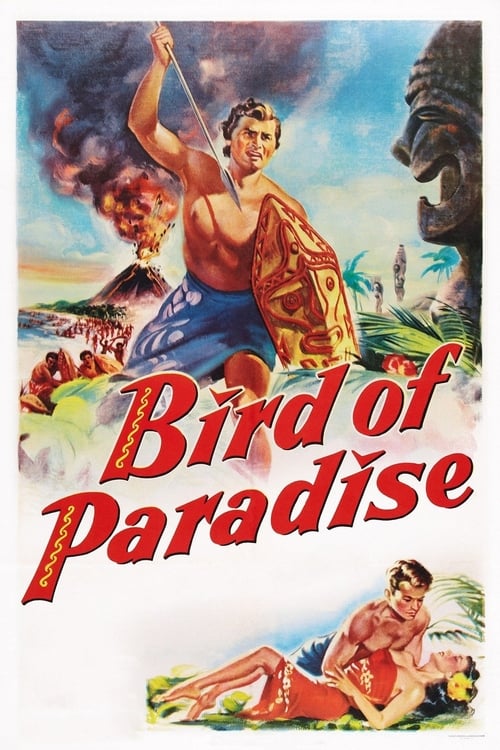
Bird of Paradise is a classic mid-century romantic adventure that upholds the social norms of its time. The narrative relies on traditional storytelling clichés, avoiding any disruption to established power structures or identity-based narratives. The film's perspective is heavily influenced by Western cultural values, using a Polynesian setting as a backdrop for the male lead's journey. This creates a colonial framework where indigenous characters are observed rather than being central to the story. Overall, the film lacks complexity in representing diverse identities. It functions as a conventional period piece that does not incorporate modern narrative techniques to challenge systemic inequalities or offer nuanced representation for underrepresented groups.
Category Breakdown
The film does not include any LGBTQ+ characters or non-cisgender identities. It focuses solely on heterosexual relationships typical of the mid-20th century.
Gender roles follow 1950s stereotypes, with the female lead serving mainly as an object of male desire. The story is driven by male characters, with limited opportunities for women to take charge.
Set in Polynesia, the film centers around a Western protagonist's journey. Indigenous characters serve primarily as a backdrop for the Westerner's personal growth and romantic interests.
The film adheres to the cultural norms of 1951, presenting a standard adventure narrative without engaging with anti-colonialist perspectives or systemic critiques.
The film does not depict any physical or neurodivergent disabilities. There are no character arcs centered around impairments or disabilities.
Present on Screen
Limited or Absent
Official Synopsis
Andre Laurence accompanies his college roommate, Tenga, back to Tenga's Polynesian island home. There, Andre becomes attracted to the native life and his friend's sister, Kalua.
1936

1931
1957

1965

1940

1945

1950

1964
No reviews yet. Be the first to share your thoughts on this movie!
Use the rating form above to leave a star rating and optional review.