Thunderdome Never Dies
2019
No user ratings available yet
Representation score: 5.2 out of 10
Representation Score
Good
2003
Director
Josell Ramos
Runtime
89 minutes
Average Rating
No ratings yetNew Showbiz Analysis
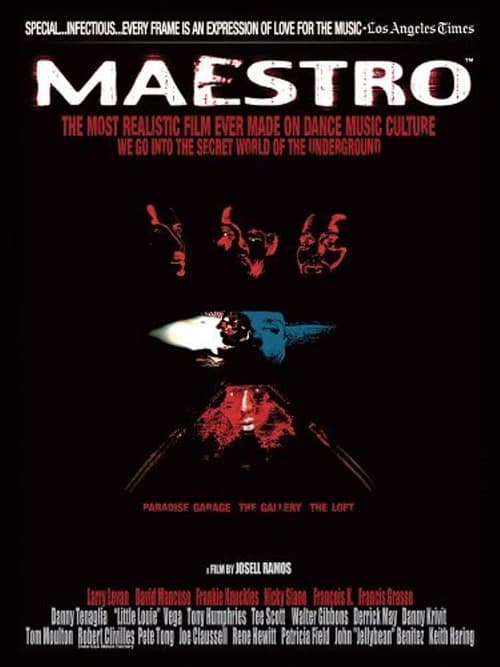
Maestro functions as a critical historical document of the underground dance music scene. By centering the narrative on figures like Larry Levan, the film redirects the historical focus from mainstream achievements to the underrepresented spaces where these genres originated. The documentary excels at illustrating how different parts of someone's identity overlap within a subculture built on refuge and non-conformity. It presents the 'outcast' lifestyle not as a peripheral curiosity, but as a powerful engine of global cultural creation. While the film offers deep insights into the racial and LGBTQ+ roots of the movement, the gender balance appears skewed toward the male-dominated roles of DJs and producers. This reflects the historical reality of the era's industry structure.
Category Breakdown
The film focuses on a dance music culture that has traditionally provided a refuge for LGBTQ+ individuals. By highlighting the founders of this underground scene, it recognizes the crucial role of LGBTQ+ communities in shaping global culture.
The documentary explores a subculture that challenges traditional gender hierarchies through expression. However, the focus remains heavily on DJs and producers, roles that have historically been male-dominated within the electronic music sphere.
The narrative emphasizes the development of dance music, a genre deeply connected with Black and Latinx innovation. It challenges Anglo-centric histories by positioning these cultural contributions as the primary drivers of the genre.
The film prioritizes a progressive cultural perspective by focusing on an intense, alternative lifestyle. It portrays the underground scene as a necessary sanctuary that exists in direct opposition to mainstream societal norms.
There is no explicit evidence regarding the portrayal of physical or neurodivergent disabilities within the provided context.
Present on Screen
Limited or Absent
Official Synopsis
Maestro, tells the story of how a group of people found refuge and a call for life outside the mainstream. What evolved was a scene that set the ground work for what was to come in dance music culture worldwide, a rare insight into the secret underground world. It's the first time this story is told in a motion Picture, included in the film are pioneer dance music DJs and producers, "founding fathers", its center being Larry Levan, as well as high-profile DJs of today. Opting for a more personal and candid approach, MAESTRO shows the true history of the people through a realistic creative aesthetic. Tracing the underground's dance origin, MAESTRO brings out a real understanding of this intense lifestyle, and the lives they lived and died for. Written by Anonymous
2019
2000

2017
2018

2001
2021

2022

2017
No reviews yet. Be the first to share your thoughts on this movie!
Use the rating form above to leave a star rating and optional review.