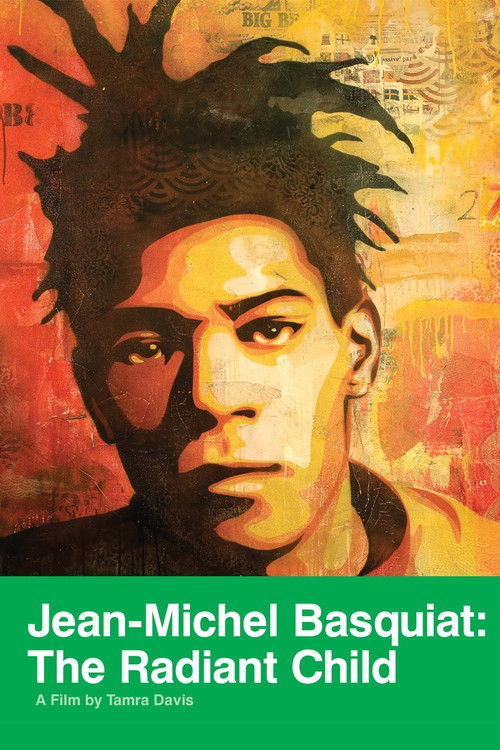
Jean-Michel Basquiat: The Radiant Child
2010
No user ratings available yet
Representation score: 6.5 out of 10
Representation Score
Good
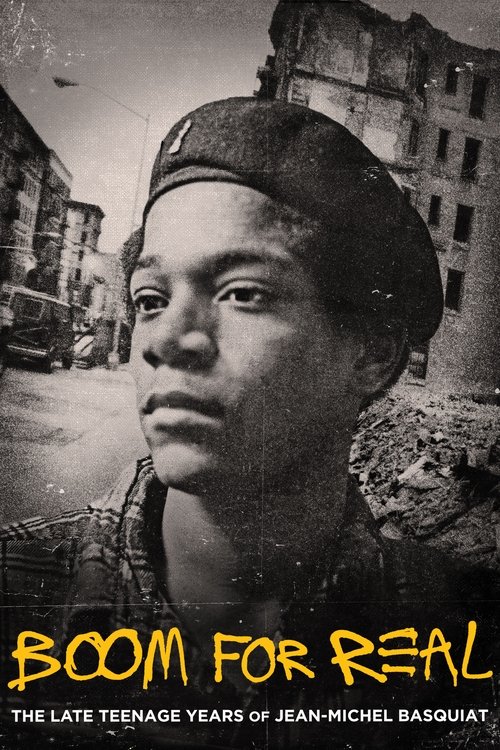
2018
Not RatedDirector
Sara Driver
Runtime
78 minutes
Average Rating
No ratings yetNew Showbiz Analysis
The documentary is a powerful study of identity politics, particularly through the lens of racial and cultural disruption. By centering Basquiat, the film challenges Western art canons and explores how a person of color reclaims cultural space. While the film succeeds in portraying the friction between individual ability to act and institutional capitalism, it remains neutral regarding LGBTQ+ and gender-specific subversion. The focus remains firmly on the intersection of race, art, and the urban landscape. Ultimately, the work thrives by documenting the deconstruction of traditional societal norms, making it a significant exploration of how underrepresented identities navigate and redefine established systems.
Category Breakdown
The film focuses on Basquiat’s life and the New York art scene of the late 1970s. Although these subcultures were historically important for LGBTQ+ expression, the documentary does not center specific LGBTQ+ stories.
Women are shown as active intellectuals and participants in the avant-garde art and music scenes. The film avoids traditional gender conflicts, offering a nuanced view of women's roles beyond 1980s domesticity.
The documentary excels by focusing on a Black artist navigating a predominantly white, high-society art world. It highlights the tension between multicultural urban life and exclusionary institutional art markets.
The film critiques Western institutions and the capitalist machinery of the art market. It values the underground and street culture over established, traditional hierarchies.
There is insufficient evidence regarding the representation of physical or neurodivergent disabilities within the documentary's scope.
Present on Screen
Limited or Absent
Official Synopsis
Exploring the pre-fame years of the celebrated American artist Jean-Michel Basquiat, and how New York City, its people, and tectonically shifting arts culture of the late 1970s and '80s shaped his vision.
2010

2014
2020
2018
2017

2021
2019
2021
No reviews yet. Be the first to share your thoughts on this movie!
Use the rating form above to leave a star rating and optional review.