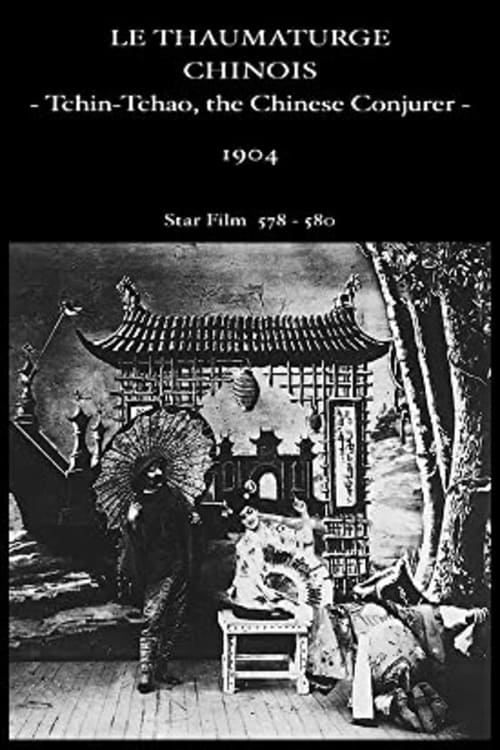
Tchin-Chao, the Chinese Conjurer
1904
No user ratings available yet
Diversity score: 3.2 out of 10
1903
Not RatedDirector
Georges Méliès
Runtime
2 minutes
Average Rating
No ratings yetSynopsis
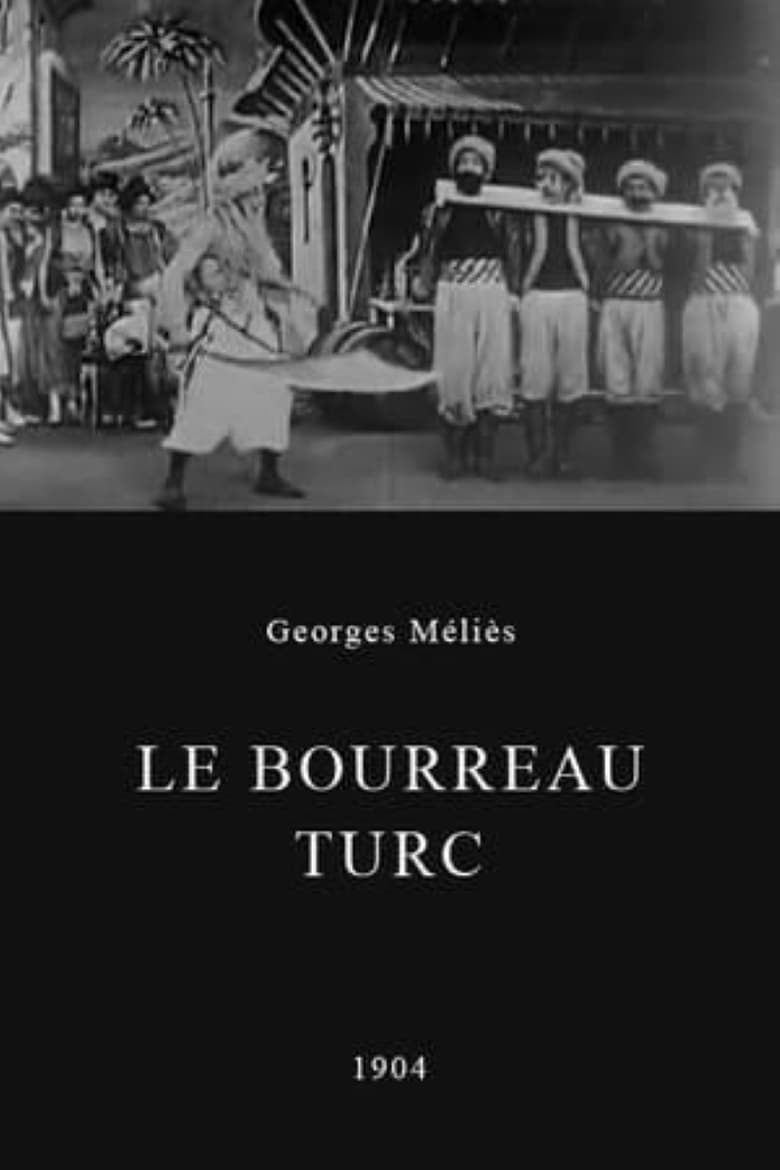
In a public place in Constantinople at the corner of a bazaar, the executioner is seated upon a stone and is resting from his daily labors while eating a crust of bread. Suddenly there come running into the place a lot of Turkish men and women preceding some Turkish policemen, who drag along four prisoners in chains. The policemen shut up the four prisoners in the pillory. Their four heads stick up through the huge plank, which is provided with four openings. One of the policemen urges the executioner to decapitate the prisoners. He accordingly seizes a mighty sabre and cuts off by a single stroke the four heads, which roll upon the ground.
Overall Score
Limited
Category Breakdown
LGBTQ+ Representation
The film contains no discernible LGBTQ+ characters or romantic subplots. The cast consists of functional archetypes serving a mechanical gag, leaving no room for queer narrative agency.
Gender Representation
The narrative is heavily skewed toward a male-centric power structure. While Turkish women appear in the bazaar, they function as background crowd members rather than individual agents.
Racial & Ethnic Diversity
The film utilizes an Orientalist setting in Constantinople. While the cast is Turkish, the representation functions through a Western lens of the exotic rather than authentic cultural depth.
Religious & Cultural Diversity
The film depicts traditional Western views of the East as a site of spectacle. It focuses on visual tricks rather than deconstructing institutional power or religious morality.
Disability Representation
There are no depictions of physical or neurodivergent disabilities. Characters are portrayed as able-bodied archetypes to facilitate the physical comedy of the execution sequence.
Strengths
Areas for Improvement
AI Analysis
Méliès's short film functions as a visual gag rather than a character-driven narrative. Because it relies on a singular, high-concept spectacle, it lacks the structural capacity for nuanced intersectional representation. The work adheres to the traditional hierarchies and cultural tropes of early 1900s cinema. It prioritizes theatricality and primitive special effects over social commentary or identity-based complexity. Ultimately, the film serves as a product of its era, utilizing a non-Western setting as a stylized backdrop for slapstick violence.
1904
1899
1907
1900
1903
1906
1900
1897
1905
1900
1900
1904
No reviews yet. Be the first to share your thoughts on this movie!
Use the rating form above to leave a star rating and optional review.