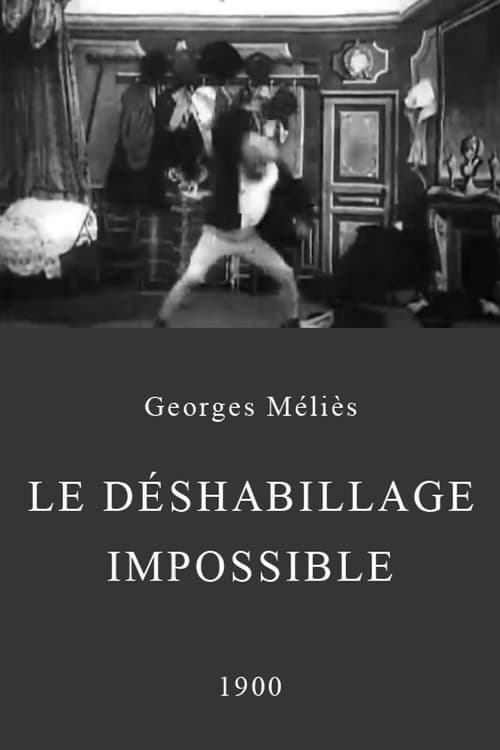
Going to Bed Under Difficulties
1900
No user ratings available yet
Representation score: 1.7 out of 10
Representation Score
Minimal
1900
Not RatedDirector
Georges Méliès
Runtime
1 minutes
Average Rating
No ratings yetNew Showbiz Analysis
This early silent short is a 'trick film' designed primarily for visual spectacle rather than social commentary. Its focus on a single man's frantic experience leaves no room for diverse perspectives. Given its historical context, the film reflects the limited scope of early cinema, lacking representation across gender, race, and identity. The narrow focus on slapstick humor limits its engagement with social diversity. Ultimately, the film serves as a foundational piece of cinematic history through its innovative techniques, but it offers minimal complexity regarding human identity or social diversity.
Category Breakdown
The film focuses solely on a male protagonist and does not depict any LGBTQ+ identities or relationships.
The narrative revolves around a male character, and the absence of female characters means there is no exploration of gender dynamics or social hierarchies.
The film features a homogeneous cast, typical of early 20th-century productions, and does not address issues related to race or ethnicity.
The story unfolds in a conventional Western setting, relying on traditional comedic elements without engaging in deeper cultural or ideological discussions.
The film does not include any representations of physical disabilities or neurodiversity, focusing instead on situational challenges.
Present on Screen
Limited or Absent
Official Synopsis
A man misses his train due to his clothes turning into other types of clothes.
1900
1906
1908
1900
1899
1901
1904
1903
No reviews yet. Be the first to share your thoughts on this movie!
Use the rating form above to leave a star rating and optional review.