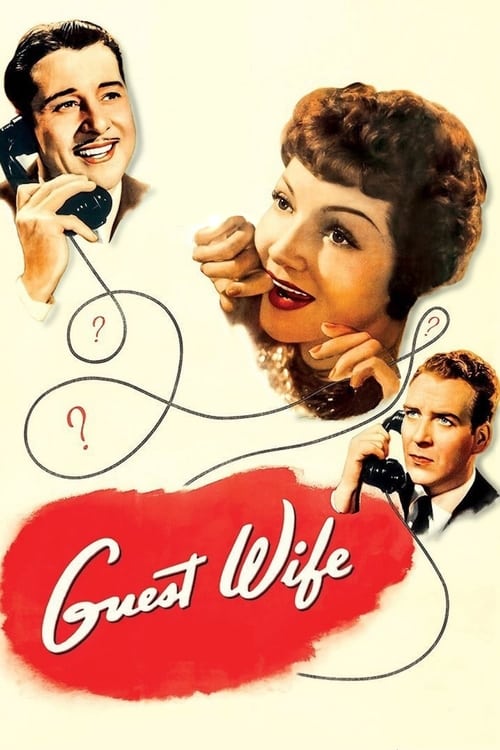
Guest Wife
1945
No user ratings available yet
Diversity score: 2.7 out of 10

1953
NRDirector
Sidney Sheldon
Runtime
100 minutes
Average Rating
No ratings yetSynopsis
Clemson Reade, a business tycoon with marriage on his mind, and Effie, a U.S. diplomat, are a modern couple. Unfortunately there seems to be too much business and not enough pleasure on the part of Effie. When Clemson meets Tarji, a princess trained in all the arts of pleasing men, he decides he wants an old fashioned girl. Princess Tarji's father is king of oil-rich Bukistan. Because of the oil situation and to maintain good political relations during the courtship between Clemson & Tarji, the State Department assigns a diplomat to maintain protocol until the wedding - Effie!
Overall Score
Limited
Category Breakdown
LGBTQ+ Representation
The film operates within a strictly heteronormative framework. There is no evidence of non-cisnormative gender identities or same-sex intimacy.
Gender Representation
The plot reinforces traditional hierarchies by centering on a male protagonist's desire for a specific type of femininity. Women are often positioned as objects of pursuit or diplomatic tools.
Racial & Ethnic Diversity
Representation leans toward exoticism through the use of Orientalist tropes. The depiction of Bukistan serves as a colorful backdrop rather than providing authentic cultural depth.
Religious & Cultural Diversity
The narrative reinforces Western institutional stability and capitalist interests. Western diplomacy is presented as the necessary framework for maintaining international order.
Disability Representation
There are no prominent depictions of visible or invisible disabilities that drive the narrative or provide character agency.
Strengths
Areas for Improvement
AI Analysis
Dream Wife is a quintessential 1950s studio production that prioritizes traditional romantic structures. It relies heavily on the era's prevailing geopolitical and social frameworks to drive its comedy and romance. The film lacks meaningful diversity, instead utilizing fictionalized Middle Eastern settings to facilitate Western romantic interests. It reinforces mid-century hierarchies rather than subverting them. Ultimately, the work functions as a product of its time, emphasizing Western-centric perspectives and traditional gender roles.
1945
1952
1966
1945
1956
1946
1951
1950

1947
1936

1931
1941
No reviews yet. Be the first to share your thoughts on this movie!
Use the rating form above to leave a star rating and optional review.