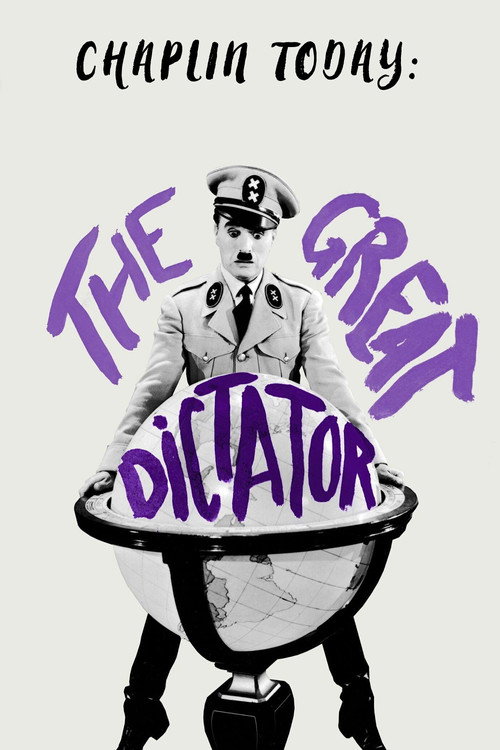
Chaplin Today: The Great Dictator
2003
No user ratings available yet
Representation score: 5.9 out of 10
Representation Score
Limited
2002
NRDirector
Michael Kloft, Kevin Brownlow
Runtime
55 minutes
Average Rating
No ratings yetNew Showbiz Analysis
The documentary functions as a specialized historical study, prioritizing political and intellectual critique over demographic variety. Its strength lies in its cultural analysis of how art challenges authoritarianism and systemic oppression. However, the film's scope is narrow, focusing almost exclusively on the lives of two men, resulting in a lack of representation for LGBTQ+ and disabled communities, as well as limited gender diversity. Ultimately, the work succeeds as a study of individual ability to act against state dogma, even if it does not provide a broad spectrum of identity-based perspectives.
Category Breakdown
The documentary focuses on the biographical parallels between Chaplin and Hitler, with no LGBTQ+ character arcs or queer-coded narratives present.
The narrative centers on male historical figures and their political impact, offering limited subversion of gender hierarchies by focusing on masculine leadership and male-dominated spheres.
The film engages with the era's racial politics through the lens of Nazi ideology, implicitly addressing systemic oppression by analyzing Chaplin’s critique of fascism.
The film deconstructs traditional power structures through satire, highlighting how media can disrupt oppressive institutional frameworks and promote humanitarian values over state-driven nationalism.
There is no evidence of neurodivergent or physically disabled characters serving as central narrative drivers in this historical overview.
Present on Screen
Limited or Absent
Official Synopsis
A look at the parallel lives of Charlie Chaplin and Adolf Hitler and how they crossed with the creation of the film “The Great Dictator,” released in 1940.
2003

1935
2013
1996
1996
1990
2013
2005
No reviews yet. Be the first to share your thoughts on this movie!
Use the rating form above to leave a star rating and optional review.