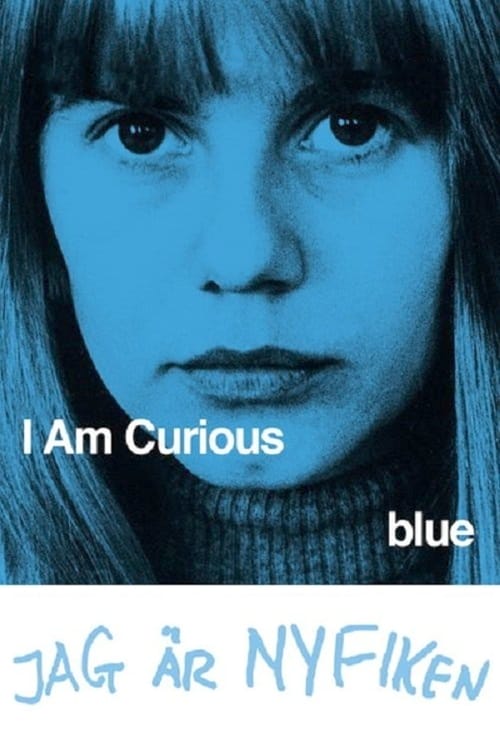
I Am Curious (Blue)
1968
No user ratings available yet
Representation score: 5.0 out of 10
Representation Score
Good
1967
XDirector
Vilgot Sjöman
Runtime
122 minutes
Average Rating
No ratings yetNew Showbiz Analysis
Vilgot Sjöman’s work stands out as a groundbreaking narrative that blends personal empowerment with political inquiry. The film excels in challenging traditional gender hierarchies, placing female autonomy and intellectual curiosity at the forefront. While the film provides a nuanced critique of Western institutions and state authority, it falls short in depicting racial and ethnic diversity. The focus remains on the class and generational divides of 1960s Sweden. Ultimately, the film's strength lies in its progressive structure. It uses a documentary-style approach to connect individual identity with social rebellion, prioritizing subjective truth over established societal norms.
Category Breakdown
The film explores a range of sexual curiosity that goes beyond strict assumptions about straight relationships. It portrays sexual exploration as a valid form of self-discovery rather than a deviation from the norm.
Lena serves as the main character who drives the narrative, playing a significant role in challenging social and sexual norms. The film emphasizes women's ability to drive the story and their intellectual curiosity over traditional dating practices.
The story mainly focuses on the socioeconomic and political situation of 1960s Sweden. There is limited evidence of significant racial or ethnic diversity among the actors.
The film questions the legitimacy of state authority and capitalist systems. It presents various truths without relying on traditional religious or singular moral frameworks.
There is no specific indication of focused portrayals of visible or invisible disabilities within the film's exploration of human experiences.
Present on Screen
Limited or Absent
Official Synopsis
Lena, aged twenty, wants to know all she can about life and reality. She collects information on everyone and everything, storing her findings in an enormous archive. She experiments with relationships, political activism, and meditation. Meanwhile, the actors, director and crew are shown in a humorous parallel plot about the making of the film and their reactions to the story and each other. Nudity, explicit sex, and controversial politics kept this film from being shown in the US while its seizure by Customs was appealed.
1968

1977
1969
1975

1977
2005
1971

1970
No reviews yet. Be the first to share your thoughts on this movie!
Use the rating form above to leave a star rating and optional review.