Fugitives
2000
No user ratings available yet
Representation score: 5.0 out of 10
Representation Score
Limited
1991
Director
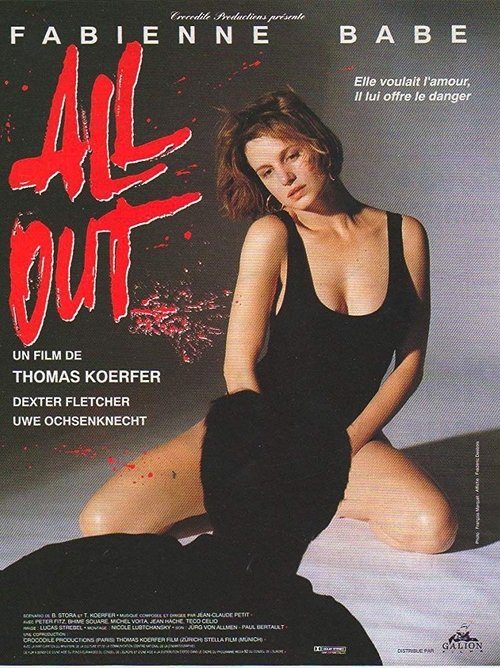
Thomas Koerfer
Runtime
106 minutes
Average Rating
No ratings yetNew Showbiz Analysis
All Out is a conventional crime drama that relies heavily on established genre clichés. The narrative prioritizes individual struggle and traditional romantic dynamics, offering little in the way of complex perspectives. The film follows a standard early-90s independent structure, focusing on a heist gone wrong and the pursuit of ransom and survival. It lacks the intentionality needed to disrupt social hierarchies or provide diverse viewpoints. Ultimately, the work functions as a character-driven drama that adheres to Eurocentric and straight-centered expectations rather than challenging them.
Category Breakdown
The film focuses on a traditional romance between Angelo and his female hostage, with no indication of queer narratives or non-cisgender identities.
The narrative uses a classic damsel-in-distress framework, where the female lead serves primarily as a catalyst for the male protagonist's actions. She gains some emotional influence but remains within traditional power structures.
The Swiss setting and character types suggest a Eurocentric narrative. There is no mention of a diverse cast or non-white characters with significant roles.
The story emphasizes individual survival and romantic connections, avoiding a critical look at institutions. It follows a standard crime-and-punishment plot without challenging societal norms.
There is no information about the inclusion or portrayal of characters with physical or cognitive disabilities.
Present on Screen
Limited or Absent
Official Synopsis
Angelo and two of his buddies set out to rob a Swiss bank, and from the start things don't go well. The man driving the getaway car packed up and left before anyone could connect him with the crime, and Angelo's other partner got shot and killed. The best he can do is grab someone's cash-filled briefcase and take a car and its driver hostage. It turns out that the driver is the daughter of the bank director, so he figures that she's good for ransom money and begins negotiations for that. Meanwhile, the briefcase he took at the bank turns out to have belonged to a man who is willing to hire killers to get it back for him. The situation grows increasingly perilous for him, and he decides to flee the scene but not before he has won the heart of his lovely hostage.
2000

1995
1985
1954

1972

1989
2001
1973
No reviews yet. Be the first to share your thoughts on this movie!
Use the rating form above to leave a star rating and optional review.