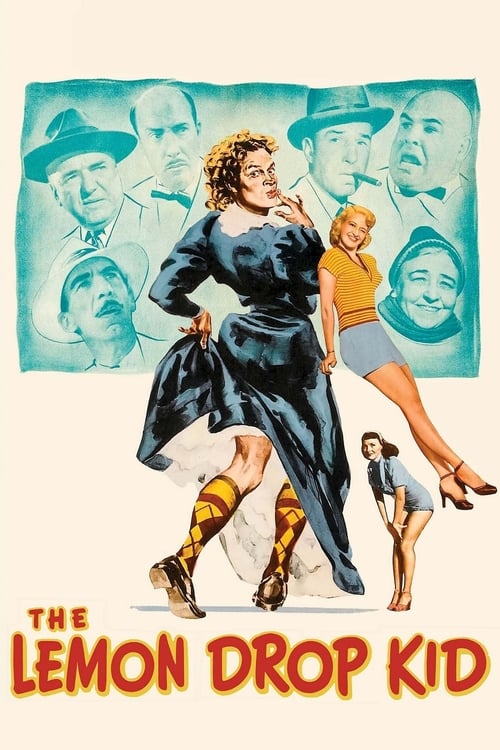
The Lemon Drop Kid
1951
No user ratings available yet
Diversity score: 1.8 out of 10

1954
ApprovedDirector
Robert Z. Leonard
Runtime
70 minutes
Average Rating
No ratings yetSynopsis
Ambrose C. Park, left on a park bench as an infant with an impulsive need to find his parents, is an assistant to a diamond cutter. Shyster lawyer Remlick, in a strategy to get a fabulous uncut diamond through Ambrose, arranges for Emily Drummon, Duke Fargoh and Maggie Drummon to pose as Ambrose's long-lost parents and sister. The diamond, through many comic situations, is acquired and the gang is going to have Ambrose cut the diamond, and relieve him of the two stones and his parental illusions at the same time. But Maggie, who has no taste for the deception, tips Ambrose off and a wild chase ensues. At the end, Ambrose is very happy as he can now marry his "sister."
Overall Score
Limited
Category Breakdown
LGBTQ+ Representation
The film adheres to strict mid-century heteronormative structures. The plot concludes with a traditional marriage, reinforcing conventional gender and orientation binaries without any queer-coded subtext.
Gender Representation
Male characters drive the central criminal machinations. While Maggie Drummon shows moral agency by exposing the deception, female characters primarily serve as romantic interests or moral compasses.
Racial & Ethnic Diversity
The cast is homogeneous, reflecting the era's production standards. There is no evidence of racial blending or non-Anglo-Saxon casting within the high-society setting.
Religious & Cultural Diversity
The narrative reinforces traditional Western social structures and high-society archetypes. It focuses on material wealth and lighthearted capers rather than critiquing class or systemic disparity.
Disability Representation
Characters are depicted as able-bodied participants in a comedic chase. There are no visible or invisible disabilities portrayed in the narrative.
Strengths
Areas for Improvement
AI Analysis
This 1954 comedy is a quintessential example of mid-century studio filmmaking, prioritizing escapist entertainment over social subversion. The narrative architecture relies heavily on traditional romantic tropes and established social hierarchies. The film functions as a reflection of its era's standard cinematic expectations. It lacks intentionality regarding intersectional representation, focusing instead on a homogeneous cast and conventional moral frameworks. Ultimately, the story reinforces the status quo through its reliance on high-society archetypes and a predictable, heteronormative resolution.
1951
1950

1964
1967

1919

1930
1937
1961
1935
1925
1940
1937
No reviews yet. Be the first to share your thoughts on this movie!
Use the rating form above to leave a star rating and optional review.