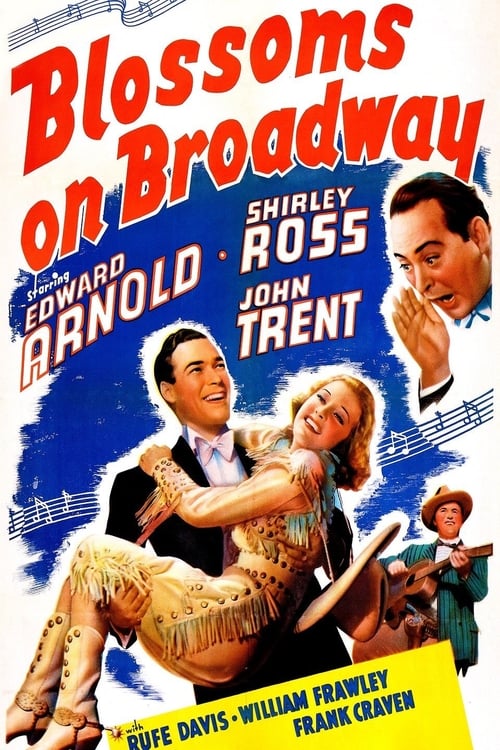
Blossoms On Broadway
1937
No user ratings available yet
Representation score: 2.0 out of 10

Representation Score
Minimal
1937
ApprovedDirector
Alfred E. Green
Runtime
87 minutes
Average Rating
No ratings yetNew Showbiz Analysis
Mr. Dodd Takes the Air is a conventional 1937 musical comedy that prioritizes standard studio-era storytelling over social subversion. The film relies on the 'fish out of water' cliché, focusing on a rural protagonist's rise to radio fame. Because it was produced under the constraints of the Hays Code, the film reinforces the social hierarchies and traditional norms of its time. It lacks intentionality regarding diverse representation, instead offering a safe, mainstream narrative of individual achievement. Ultimately, the film serves as a period piece that reflects the homogeneous and straight-centered landscape of Hollywood in the late 1930s.
Category Breakdown
The film adheres to the strict assumptions that everyone is straight or cisgender. It lacks any narratives that critique traditional romantic structures or feature non-assuming gender matches what was assigned at birth identities.
Female characters likely serve as comedic relief or romantic motivation rather than independent agents. The narrative follows traditional gender hierarchies common to musical comedies of this era.
The production reflects the era's tendency toward homogeneous casting. The story centers on Anglo-Saxon archetypes typical of the 'country bumpkin' cliché.
The plot celebrates individual success and upward mobility within modern capitalist structures. It functions as a validation of integrating rural characters into established social frameworks.
There is no indication of characters with visible or invisible disabilities within the narrative.
Present on Screen
Limited or Absent
Official Synopsis
A country bumpkin becomes a singing sensation on the radio.
1937
1933
1933
1937
1939
1936

1935
1943
No reviews yet. Be the first to share your thoughts on this movie!
Use the rating form above to leave a star rating and optional review.