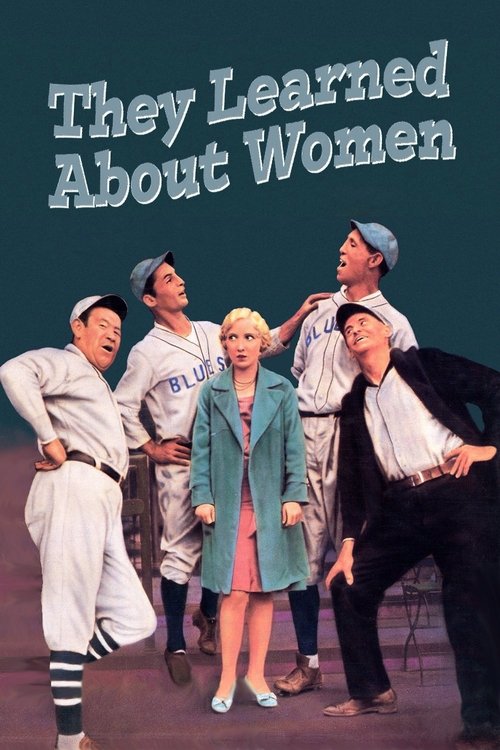
They Learned About Women
1930
No user ratings available yet
Representation score: 0.5 out of 10

Representation Score
Good
1930
Director
Germaine Dulac
Runtime
6 minutes
Average Rating
No ratings yetNew Showbiz Analysis
Germaine Dulac’s direction offers a strong foundation for challenging social hierarchies through a focus on female inner life. The film successfully disrupts traditional gender roles by presenting a protagonist who lives outside the bounds of domestic stability and feminine purity. However, the film lacks explicit LGBTQ+ representation and provides no clear evidence regarding racial or ethnic diversity. The portrayal of alcoholism also raises questions about whether disability is handled with nuance or used as a moralistic plot device. Ultimately, the work serves as a critique of conventional Western morality and social institutions, even if it remains limited in its breadth of identity representation.
Category Breakdown
The film does not explicitly show non-straight relationships or same-sex intimacy. However, the protagonist's life on the margins hints at a move away from traditional family life.
The story challenges gender norms by focusing on a poor woman whose ambitions go beyond the era's standards of purity. Her unconventional actions defy the period's expectations of passive femininity.
There is insufficient evidence to evaluate the racial composition of the cast or the presence of non-Anglo-Saxon majority dynamics within this work.
The film criticizes traditional social structures by showing a woman rejecting conventional morality. This focus on social isolation suggests that established institutions can be exclusionary.
The protagonist's alcoholism is a key part of the story, but it's unclear if this is a genuine struggle or a stereotype. The depiction's depth regarding the character's control is uncertain.
Present on Screen
Limited or Absent
Official Synopsis
A destitute, drunk woman appears to yearn for the life of a streetwalker.
1930

1931

1931
1952

1951

1928

1932
1929
No reviews yet. Be the first to share your thoughts on this movie!
Use the rating form above to leave a star rating and optional review.