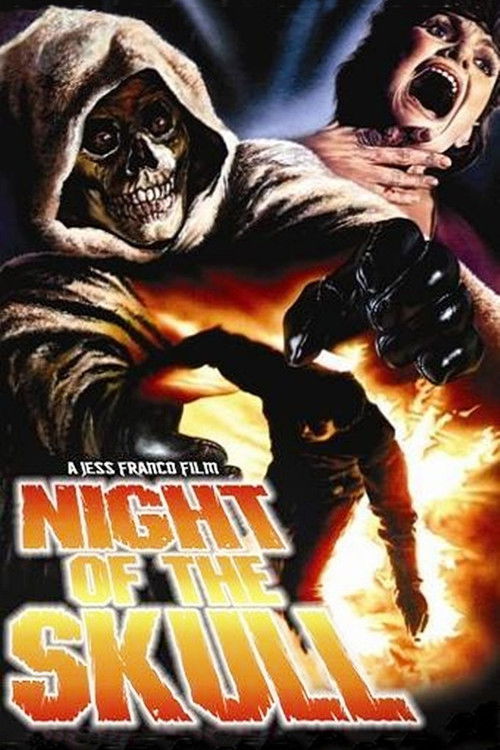
Night of the Skull
1974
No user ratings available yet
Diversity score: 4.2 out of 10

1972
Director
Alfonso Balcázar
Runtime
80 minutes
Average Rating
No ratings yetSynopsis
This Spanish-Italian co-production tells the story of a man who feels deep guilt for the death of his wife: he, an alcoholic, is convinced that he accidentally caused her fatal fall in their house while he was drunk. He finds a new wife, but he is unable to cope with his first wife's death. Furthermore, it appears the maid and his sister do not accept the new woman in the household. After a while, suddenly begins bodies turn up ... and the grave of the man's first wife is empty!
Overall Score
Limited
Category Breakdown
LGBTQ+ Representation
The film lacks LGBTQ+ characters or non-cisnormative identities. The plot centers on traditional marital structures and heteronormative dynamics.
Gender Representation
Female characters exert influence through domestic gatekeeping and social friction. However, they operate within traditional hierarchies rather than subverting them.
Racial & Ethnic Diversity
The production features a homogeneous European cast. There is no evidence of diverse ethnicities or non-white majority casting.
Religious & Cultural Diversity
The story focuses on individual morality and domestic tragedy. It does not prioritize secularism or critiques of Western institutions.
Disability Representation
Alcoholism serves as a plot device for tragedy rather than a nuanced study of addiction. No physical or sensory disabilities are present.
Strengths
Areas for Improvement
AI Analysis
Night of the Scorpion operates strictly within the conventional genre tropes of 1970s European horror. The narrative focuses on a singular domestic tragedy, centering on a male protagonist's guilt and alcoholism. While female characters are present, they are confined to roles of domestic tension and social friction. The film lacks intentionality regarding intersectional storytelling or the subversion of established social hierarchies. Ultimately, the film reflects the homogeneous social structures of its era, offering little engagement with progressive representation or systemic critique.
1974
1982

1967

1974

1982

1980
1974

1981
1972
1988
2002
1973
No reviews yet. Be the first to share your thoughts on this movie!
Use the rating form above to leave a star rating and optional review.